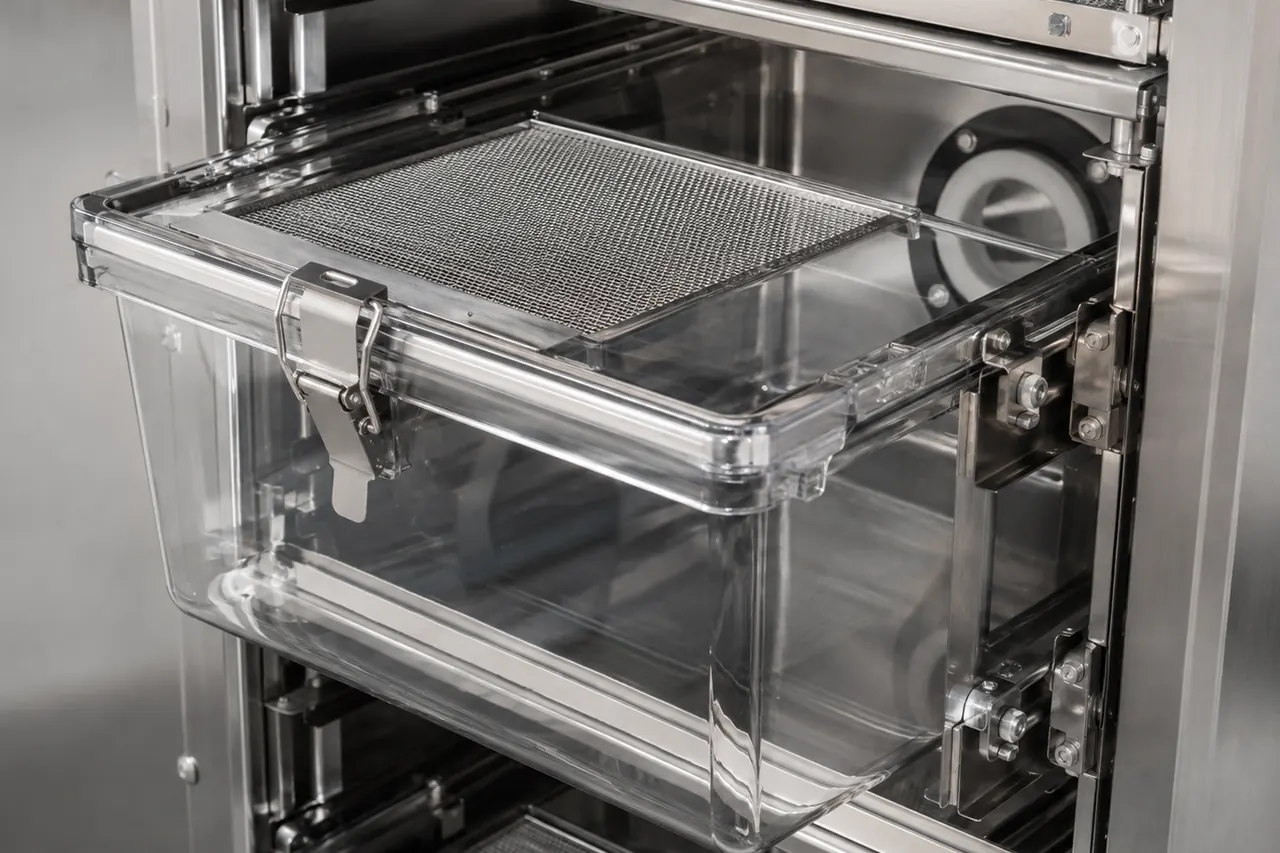
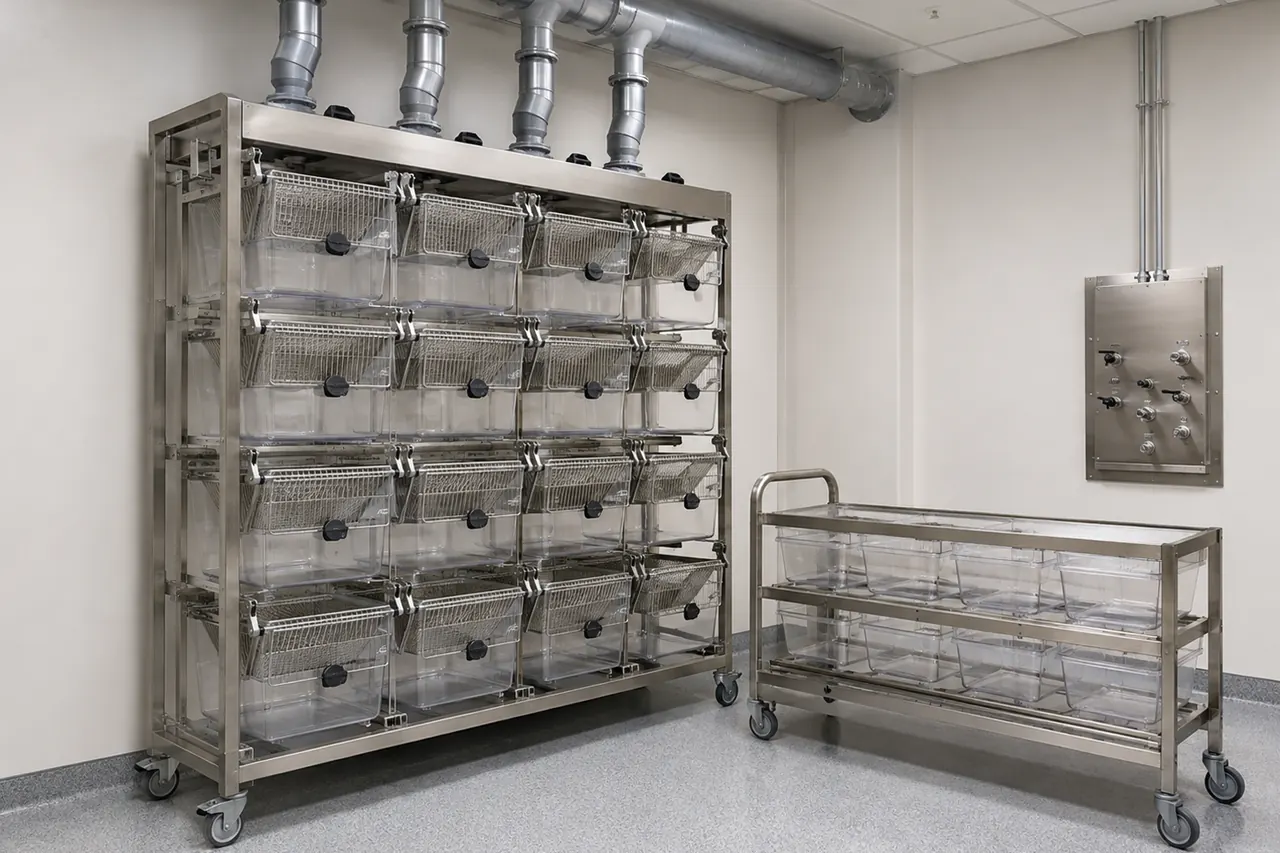
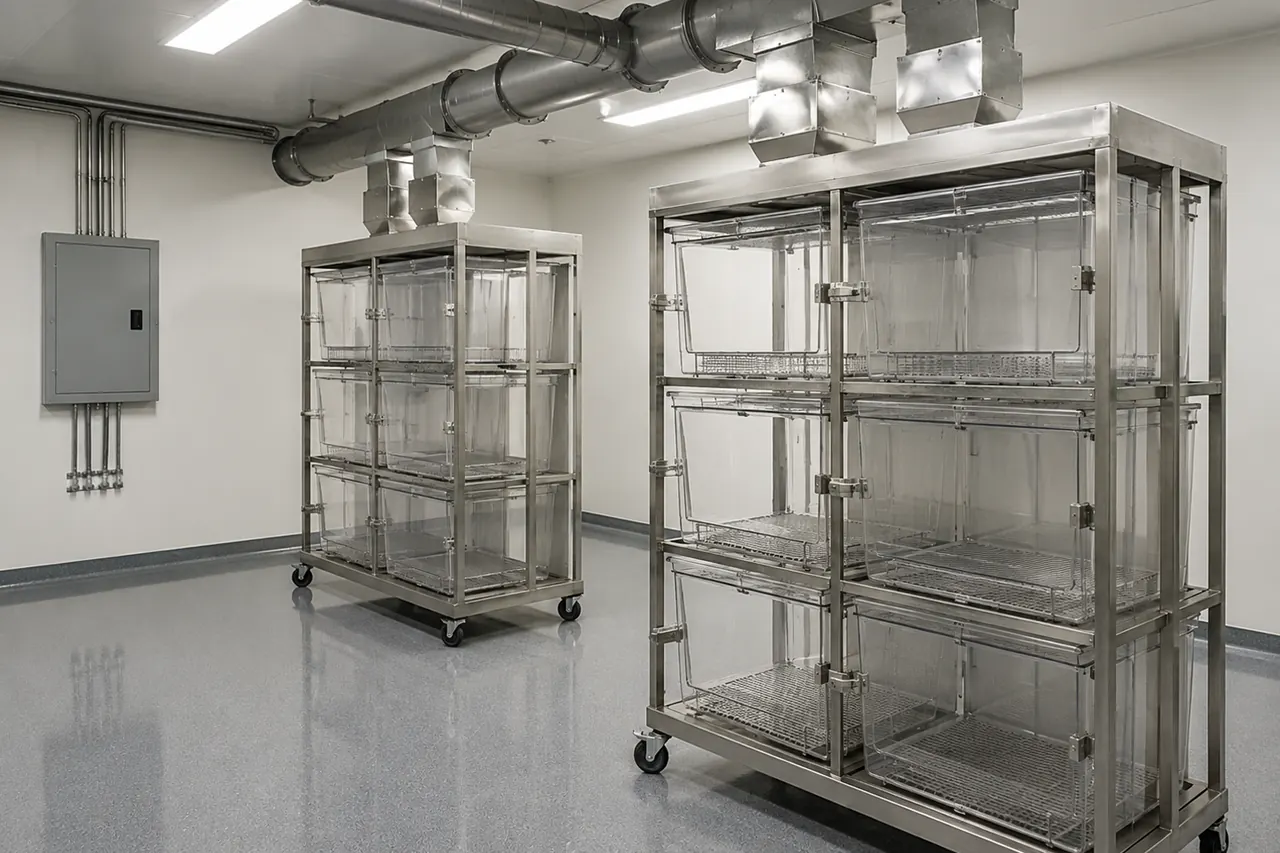
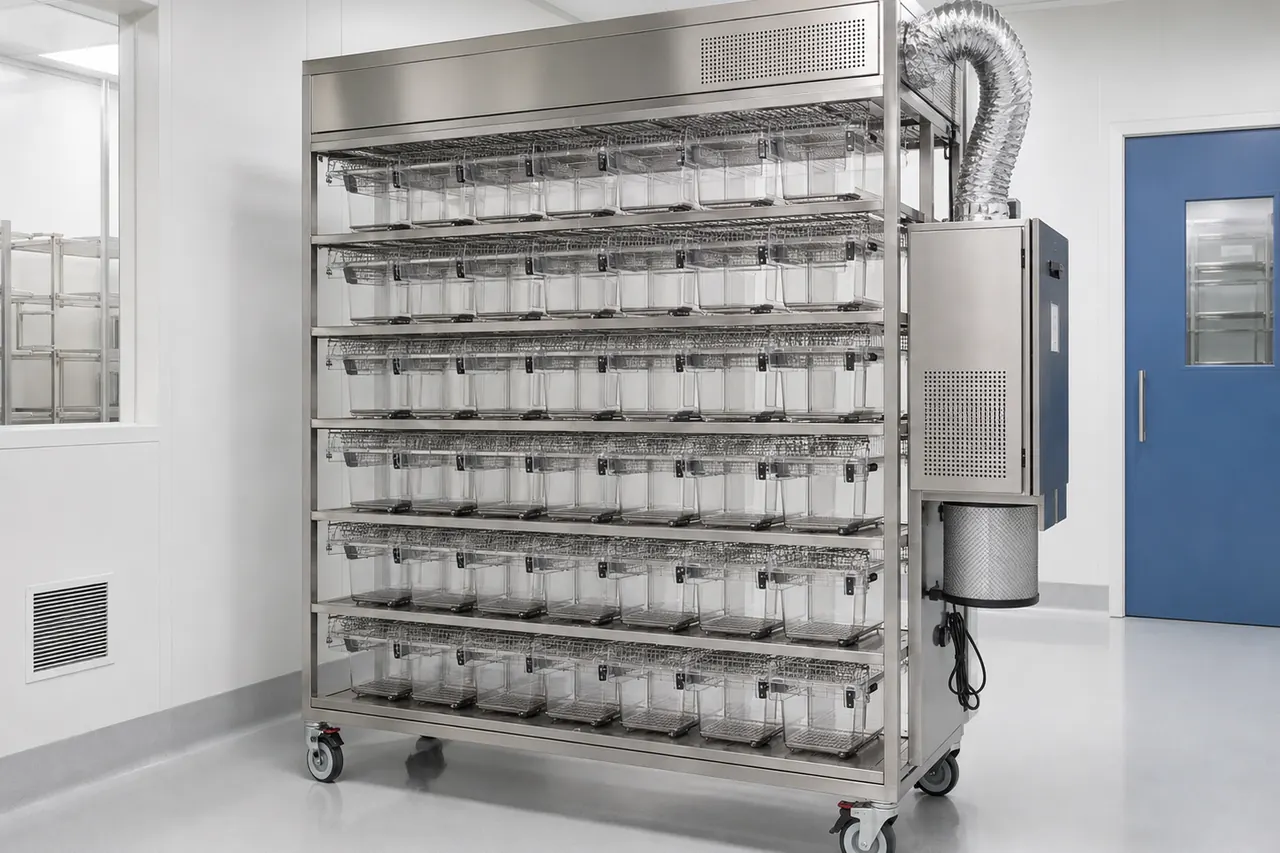
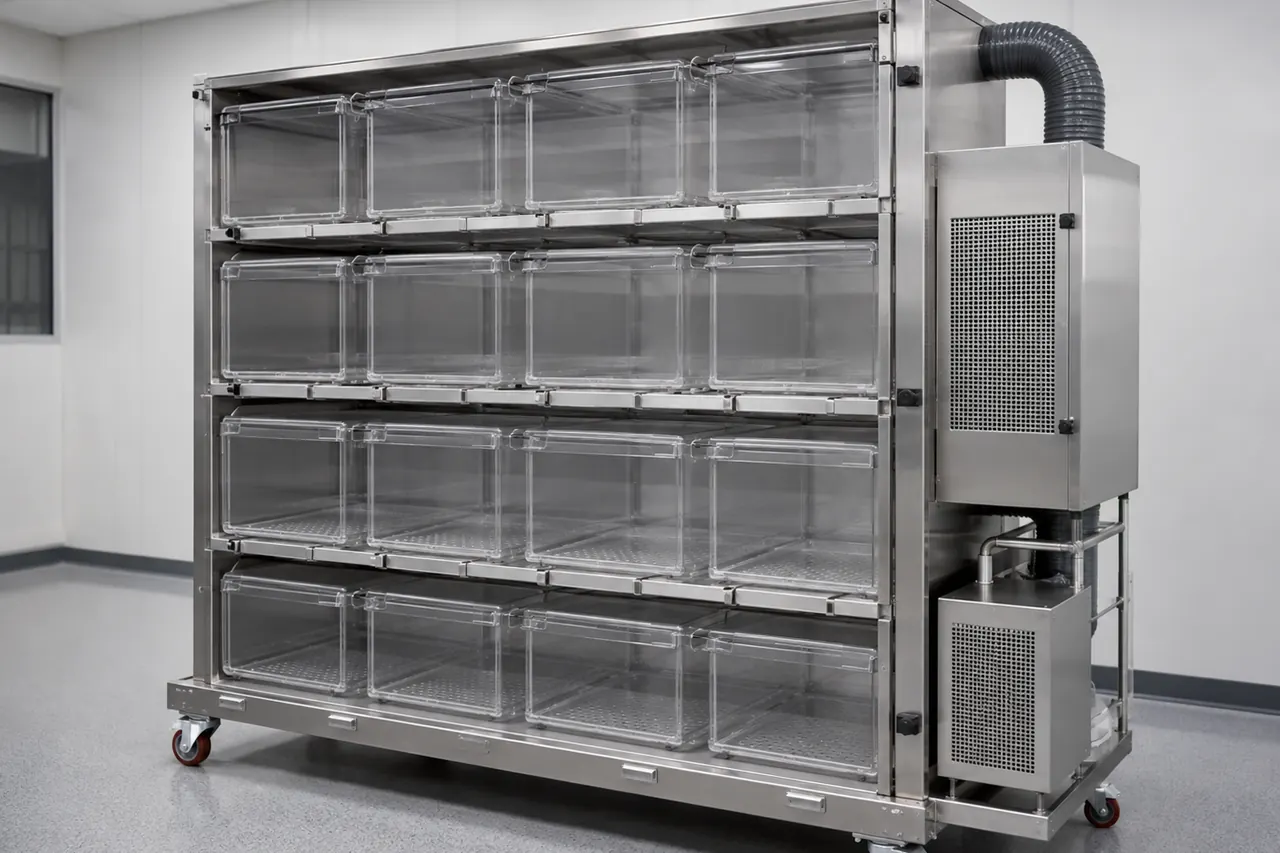
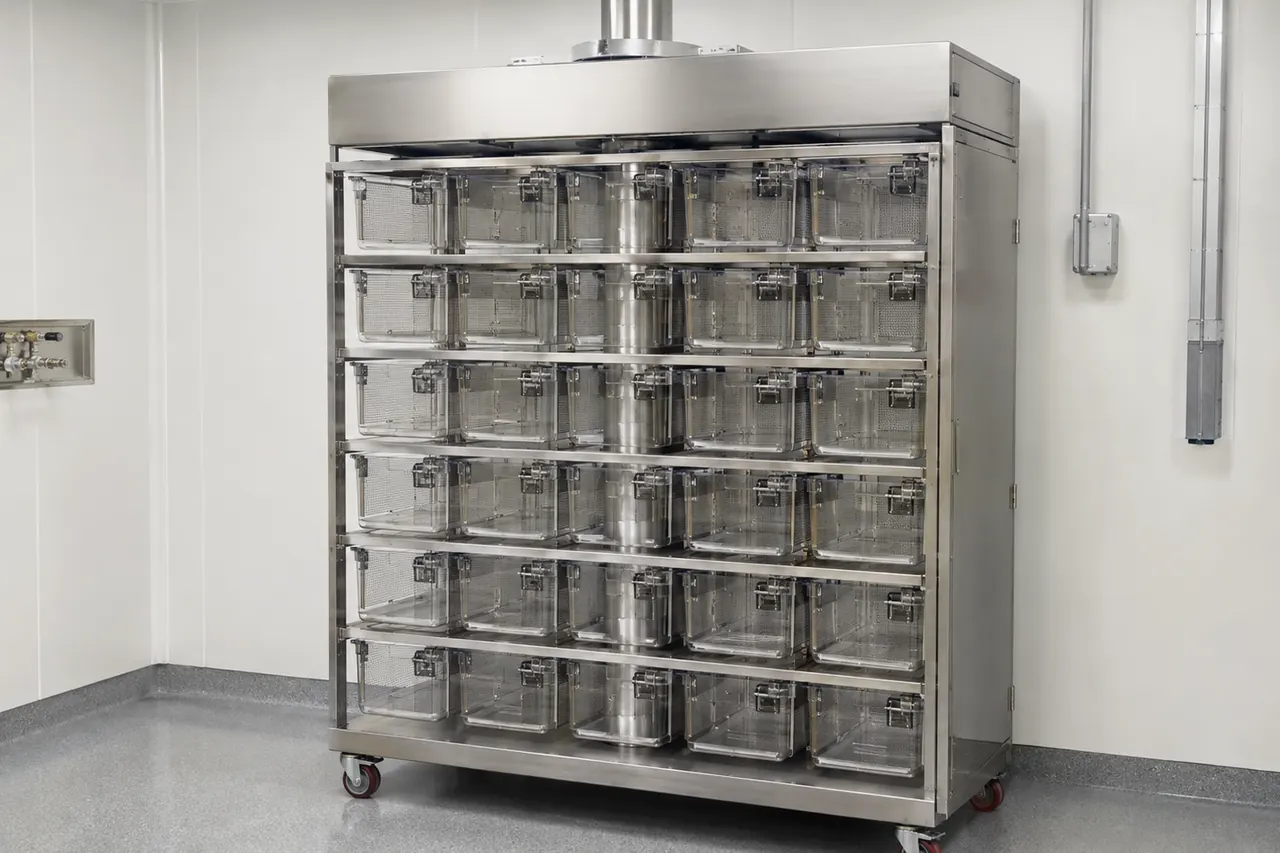
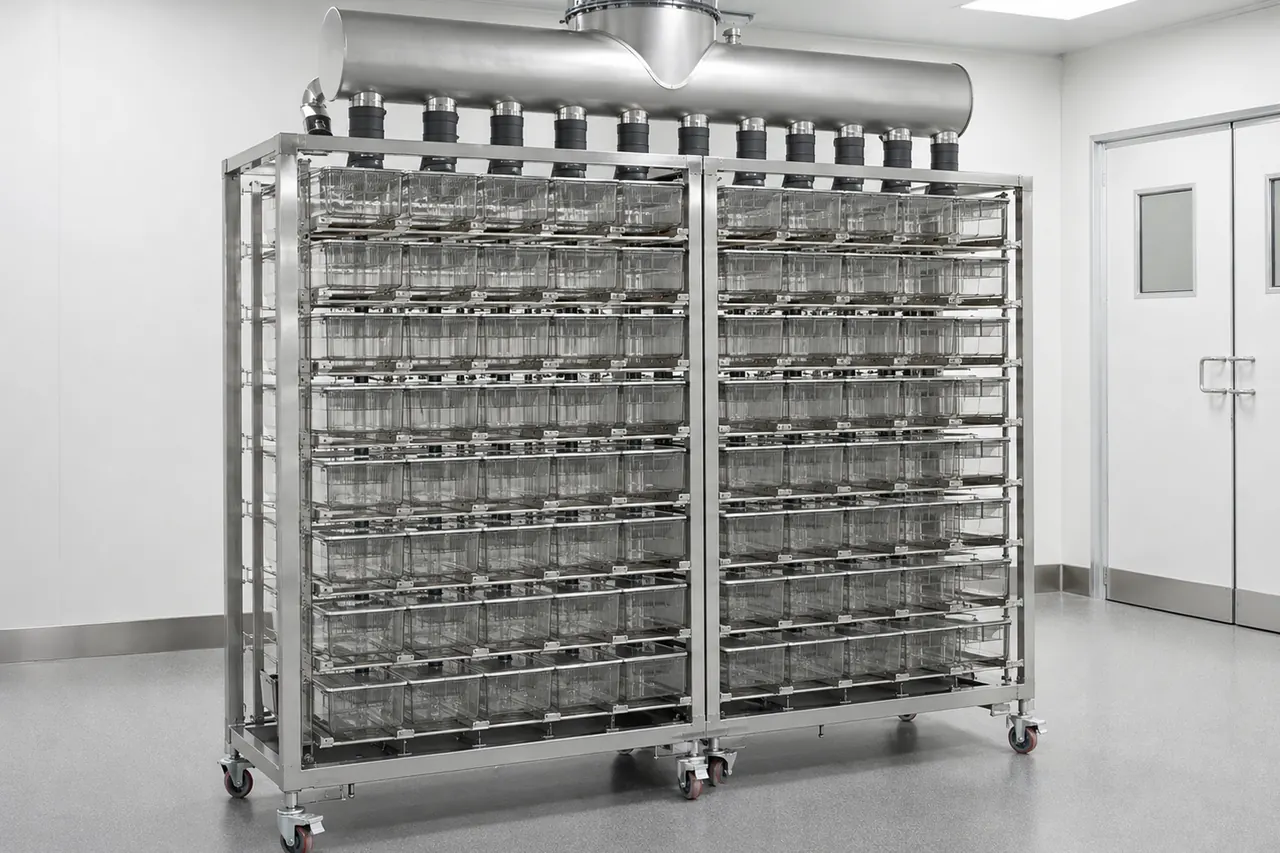
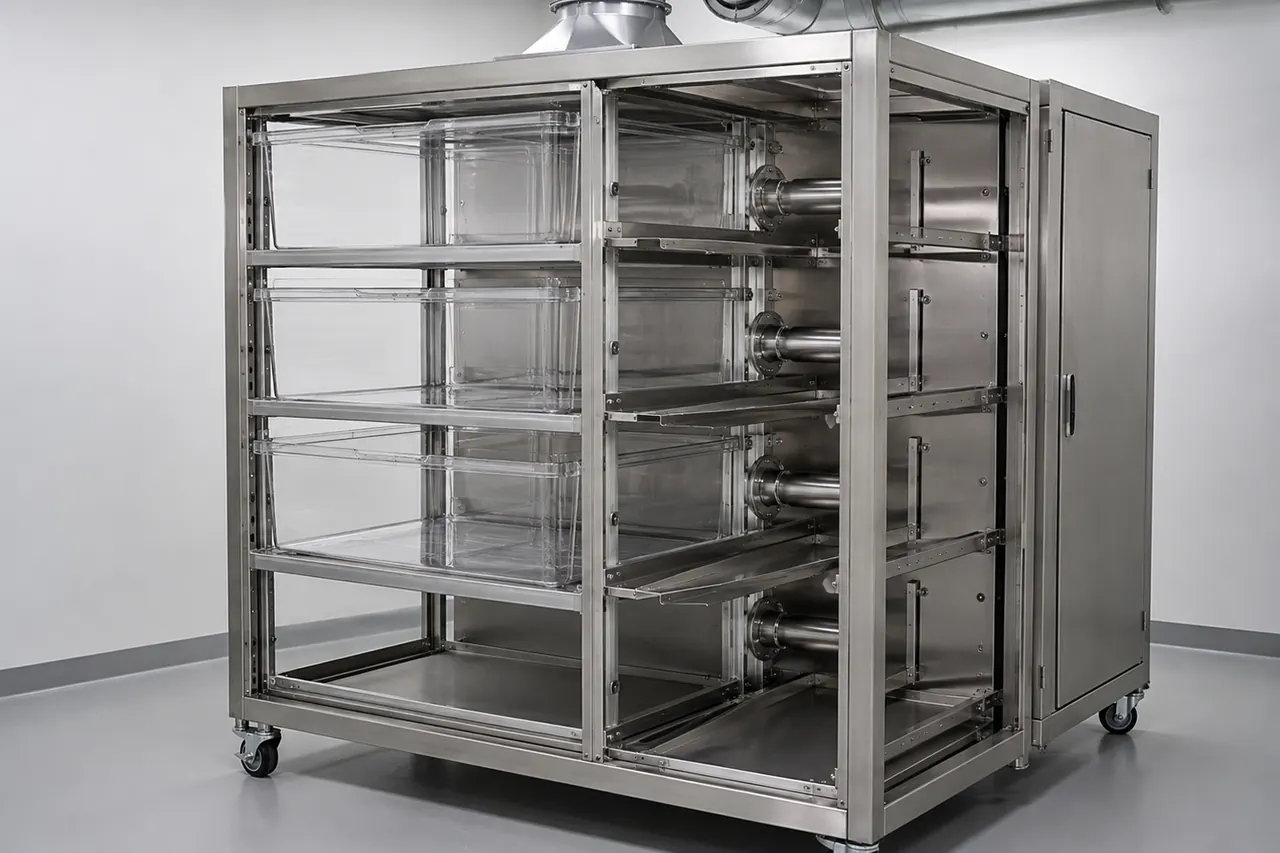
Rat Central Exhaust Ventilated Cage System overall equipment view

EVC Central Exhaust Ventilated Cage Systems

Rat Central Exhaust Ventilated Cage System

Rat Central Exhaust Ventilated Cage System supports planning for facility-connected ventilated cage housing coordinated with the vivarium exhaust system.

Room fitfacility-connected ventilated cage housing coordinated with the vivarium exhaust systemSystem overview

Product overview

What this equipment is used for

In a laboratory animal facility, Rat Central Exhaust Ventilated Cage System can be planned as part of facility-connected ventilated cage housing coordinated with the vivarium exhaust system. Coordinate it with compatible cages, automatic watering, cage-change equipment, and room exhaust and controls, the room layout, operator tasks, cleaning process, and service access.

Configuration basis

Use context
facility-connected ventilated cage housing coordinated with the vivarium exhaust system
Equipment family
EVC Central Exhaust Ventilated Cage Systems
Final configuration
Dimensions, utilities, and options are confirmed for the project.

Facility fit and configuration

Plan the product around the room and daily routine

Separate routine use from configuration decisions, then send the remaining room and purchasing details.

Use scenarios

Where the equipment fits

  • 1Rat Central Exhaust Ventilated Cage System where the project calls for rat facility-connected cage ventilation
  • 2Rat Central Exhaust Ventilated Cage System for new mouse or rat room planning
  • 3Rat Central Exhaust Ventilated Cage System for EVC rack replacement or capacity expansion
  • 4Rat Central Exhaust Ventilated Cage System for facility-exhaust retrofit and cage-room coordination

Configuration review

What changes the setup

  • Confirm the intended rat facility-connected cage ventilation for Rat Central Exhaust Ventilated Cage System.
  • Confirm species, cage format, and rack quantity for Rat Central Exhaust Ventilated Cage System.
  • Confirm facility exhaust capacity and duct connection for Rat Central Exhaust Ventilated Cage System.
  • Confirm protection and room-pressure intent for Rat Central Exhaust Ventilated Cage System.
  • Confirm aisle, doorway, and service clearance for Rat Central Exhaust Ventilated Cage System.

RFQ details

Complete the project brief

Request a configuration review for Rat Central Exhaust Ventilated Cage System. Include the room drawing, intended use, quantity, interfaces, cleaning method, and documentation requirements.

  • Intended use: rat facility-connected cage ventilation.
  • Species and cage population.
  • Rack and cage quantities.
  • Room drawing and clearances.
Request a quote

Final configuration, dimensions, utilities, and delivery scope are set during the quote and order process.

Buyer FAQ

Questions about Rat Central Exhaust Ventilated Cage System

Quick answers for room planning, product comparison, and quotation preparation.

Rat Central Exhaust Ventilated Cage System: What information is needed to buy or quote a rat EVC cage system?

For a useful Rat Central Exhaust Ventilated Cage System quotation, provide species and cage population, rack and cage quantities, room drawing and clearances, available exhaust and duct locations, power and watering interfaces, alarm and control expectations, and commissioning and documentation needs. Ask the supplier to list included equipment, exclusions, utilities, documentation, delivery scope, and the items that still require confirmation.

Rat Central Exhaust Ventilated Cage System: How do I size rat cages, rack capacity, and room footprint for an EVC system?

Choose Rat Central Exhaust Ventilated Cage System by starting with species, cage format, and rack quantity, facility exhaust capacity and duct connection, protection and room-pressure intent, aisle, doorway, and service clearance, watering and cage-interface compatibility, and controls, alarms, and continuity requirements. Then compare the same operating assumptions across suppliers, including quantity, room fit, cleaning, interfaces, accessories, documentation, and future expansion.

Rat Central Exhaust Ventilated Cage System: When should a rat facility choose EVC instead of IVC housing?

An EVC arrangement is selected when rack exhaust is intentionally coordinated with the facility exhaust path. An IVC system ventilates cages individually, but its rack may use self-contained blowers or a facility connection depending on the design. For Rat Central Exhaust Ventilated Cage System, compare the protection objective, room HVAC and exhaust capacity, cage and rack interfaces, watering, alarms, service access, sanitation workflow, and continuity plan before choosing either architecture.

Rat Central Exhaust Ventilated Cage System: Which rat cages, bottles, feeding components, and rack interfaces are compatible?

Compatibility for Rat Central Exhaust Ventilated Cage System should be checked at the interface level. Confirm dimensions, loads, connection points, utilities, controls, cleaning method, and the related equipment involved, including compatible cages, automatic watering, cage-change equipment, and room exhaust and controls. Request a written compatibility list or interface drawing for the quoted configuration.

Rat Central Exhaust Ventilated Cage System: What aisle, doorway, exhaust, and service clearances are required for rat racks?

Before placing Rat Central Exhaust Ventilated Cage System, document species and cage population, rack and cage quantities, room drawing and clearances, available exhaust and duct locations, power and watering interfaces, alarm and control expectations, and commissioning and documentation needs. The layout review should show operator access, maintenance clearance, movement routes, utilities, adjacent equipment, and any clean or contained boundary. Final interfaces should be confirmed on an approved drawing before production or installation.

Rat Central Exhaust Ventilated Cage System: Which rat cage and rack components can be washed or sterilized?

The answer for Rat Central Exhaust Ventilated Cage System depends on the selected configuration and intended operating process. Compare the relevant dimensions, interfaces, utilities, cleaning method, accessories, and operating limits. Ask for a product-specific technical submittal that clearly lists the supplied components and applicable options.
Related resources

Go deeper with planning resources for Rat Central Exhaust Ventilated Cage System

FAQ

FAQ library

Rat Central Exhaust Ventilated Cage System: What information is needed to buy or quote a rat EVC cage system?

For a useful Rat Central Exhaust Ventilated Cage System quotation, provide species and cage population, rack and cage quantities, room drawing and clearances, available exhaust and duct locations, power and watering interfaces, alarm and control expectations, and commissioning and documentation needs. Ask the supplier to list included equipment, exclusions, utilities, documentation, delivery scope, and the items that still require confirmation.

Rat Central Exhaust Ventilated Cage System: How do I size rat cages, rack capacity, and room footprint for an EVC system?

Choose Rat Central Exhaust Ventilated Cage System by starting with species, cage format, and rack quantity, facility exhaust capacity and duct connection, protection and room-pressure intent, aisle, doorway, and service clearance, watering and cage-interface compatibility, and controls, alarms, and continuity requirements. Then compare the same operating assumptions across suppliers, including quantity, room fit, cleaning, interfaces, accessories, documentation, and future expansion.

Rat Central Exhaust Ventilated Cage System: When should a rat facility choose EVC instead of IVC housing?

An EVC arrangement is selected when rack exhaust is intentionally coordinated with the facility exhaust path. An IVC system ventilates cages individually, but its rack may use self-contained blowers or a facility connection depending on the design. For Rat Central Exhaust Ventilated Cage System, compare the protection objective, room HVAC and exhaust capacity, cage and rack interfaces, watering, alarms, service access, sanitation workflow, and continuity plan before choosing either architecture.

Guides

Buyer guides

Solutions

Solution references