Solution reference

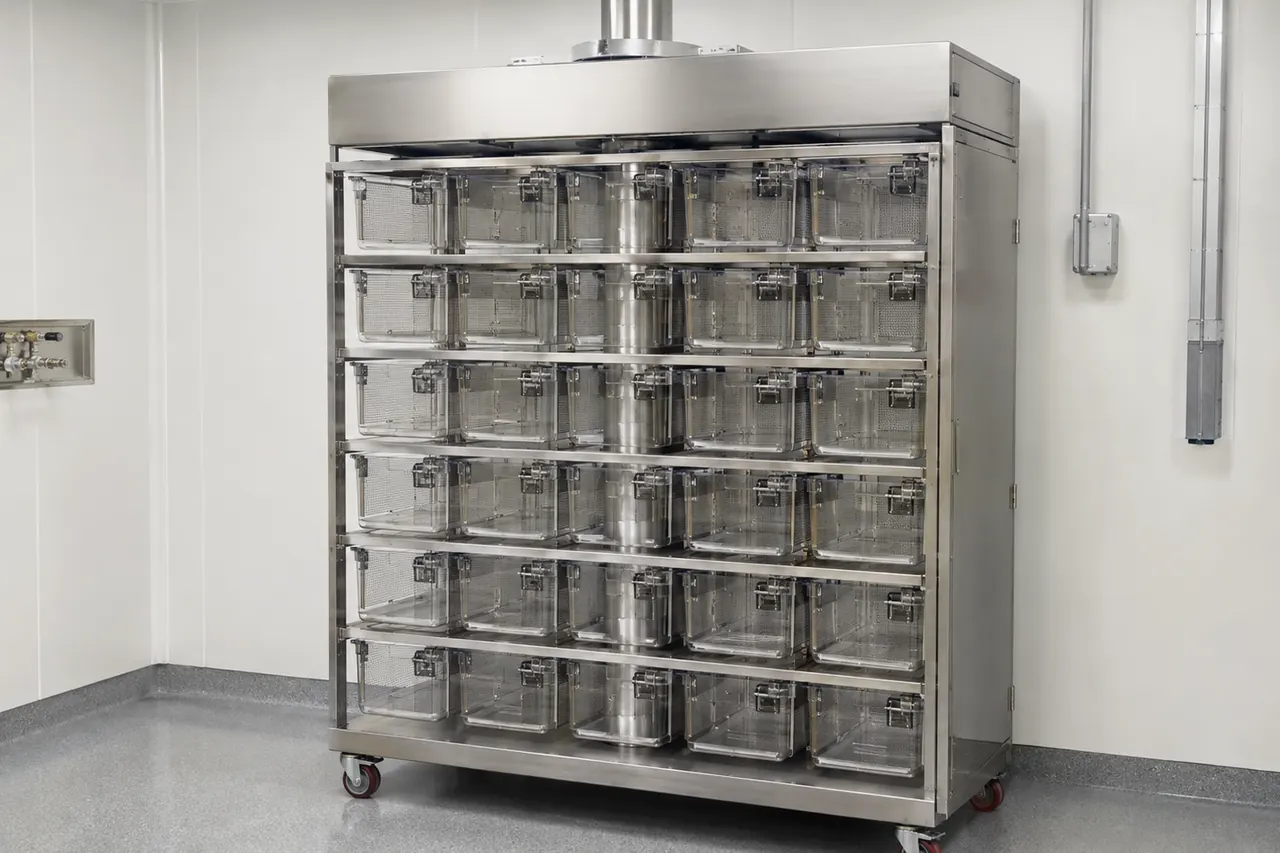
Central Exhaust Ventilated Cage System for Laboratory Rodent Housing

Translate mouse and rat colony demand into cage families, rack quantities, room zoning, service access, cage-changing capacity, and central exhaust requirements for laboratory rodent housing.

Central Exhaust Ventilated Cage System for Laboratory Rodent Housing product and room planning reference

Rodent housing planning framework

Build the cage census by species and room

List mouse and rat populations separately, including occupied cages, quarantine or holding needs, spare capacity, and expected growth. Do not use a single total cage count when cage dimensions, handling clearances, and rack capacities differ by species.

Choose fixed and mobile equipment by operating role

Fixed central exhaust racks suit planned housing positions connected to the facility system. Mobile ventilated equipment can support defined transfer, recovery, temporary holding, or continuity tasks. The equipment schedule should state the intended role of each unit instead of treating mobility as a substitute for the room housing plan.

Test density against daily work

More cage positions are useful only when operators can reach cages safely, complete observation and cage-changing tasks, move racks or carts through doors, and transfer soiled items to the wash area. Review aisle clearance, cage-changing capacity, cleaning access, and support equipment before increasing the planned rack count.

Prepare a species-specific RFQ

For each room, provide species, cage family, occupied and spare cage targets, proposed rack rows, fixed or mobile role, room drawing, exhaust information, and the expected cage-changing route. This makes mouse and rat requirements comparable without collapsing them into one generic rodent housing request.

Independent guidance

Facility planning sources

Use these independent references to review facility planning assumptions. Project-specific equipment, airflow interfaces, and final specifications are confirmed during quotation and engineering review.

Related equipment entries

EVC Central Exhaust Ventilated Cage Systems

Central Exhaust Ventilated Cage System

Central Exhaust Ventilated Cage System supports planning for facility-connected ventilated cage housing coordinated with the vivarium exhaust system. Review species, cage format, and rack quantity, facility exhaust capacity and duct connection, and protection and room-pressure intent before comparing configurations. Final construction, performance, compatibility, utilities, documentation, and delivery scope are confirmed for the quoted configuration.

EVC Central Exhaust Ventilated Cage Systems

Mouse Central Exhaust Ventilated Cage System

Mouse Central Exhaust Ventilated Cage System supports planning for facility-connected ventilated cage housing coordinated with the vivarium exhaust system. Review species, cage format, and rack quantity, facility exhaust capacity and duct connection, and protection and room-pressure intent before comparing configurations. Final construction, performance, compatibility, utilities, documentation, and delivery scope are confirmed for the quoted configuration.

EVC Central Exhaust Ventilated Cage Systems

Rat Central Exhaust Ventilated Cage System

Rat Central Exhaust Ventilated Cage System supports planning for facility-connected ventilated cage housing coordinated with the vivarium exhaust system. Review species, cage format, and rack quantity, facility exhaust capacity and duct connection, and protection and room-pressure intent before comparing configurations. Final construction, performance, compatibility, utilities, documentation, and delivery scope are confirmed for the quoted configuration.