IVC Cage Systems
Mouse IVC Cage
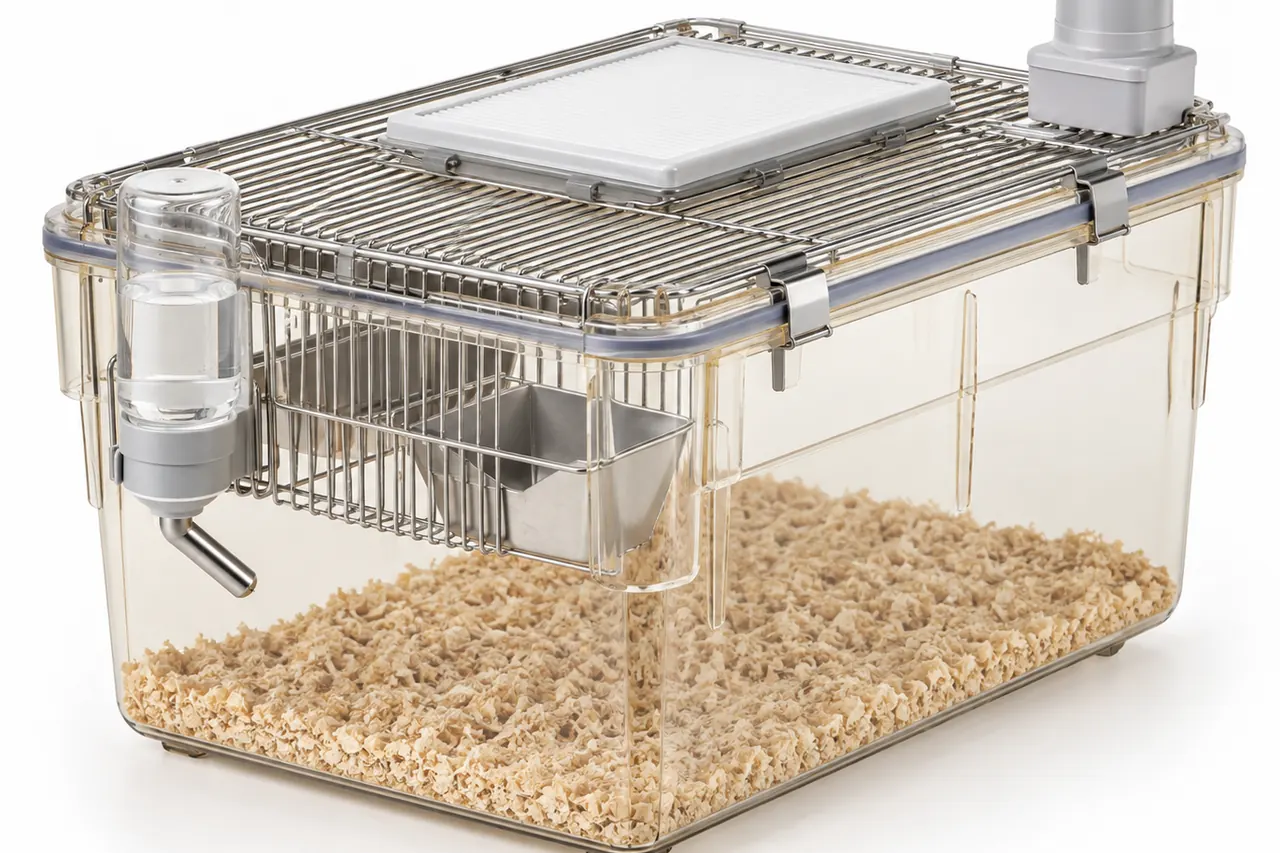
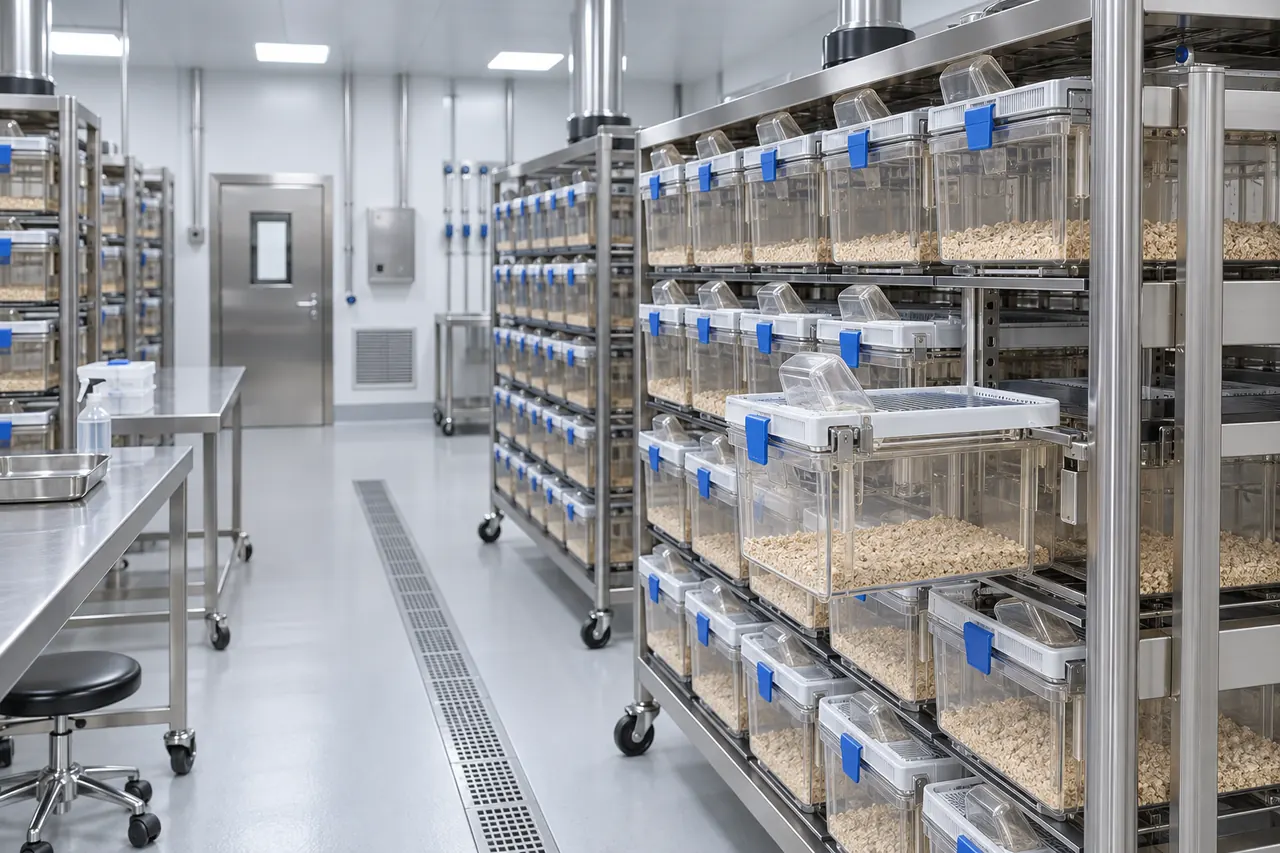
Mouse IVC Cage is the primary enclosure within an individually ventilated cage system.
Product gallery
Product views for Mouse IVC Cage
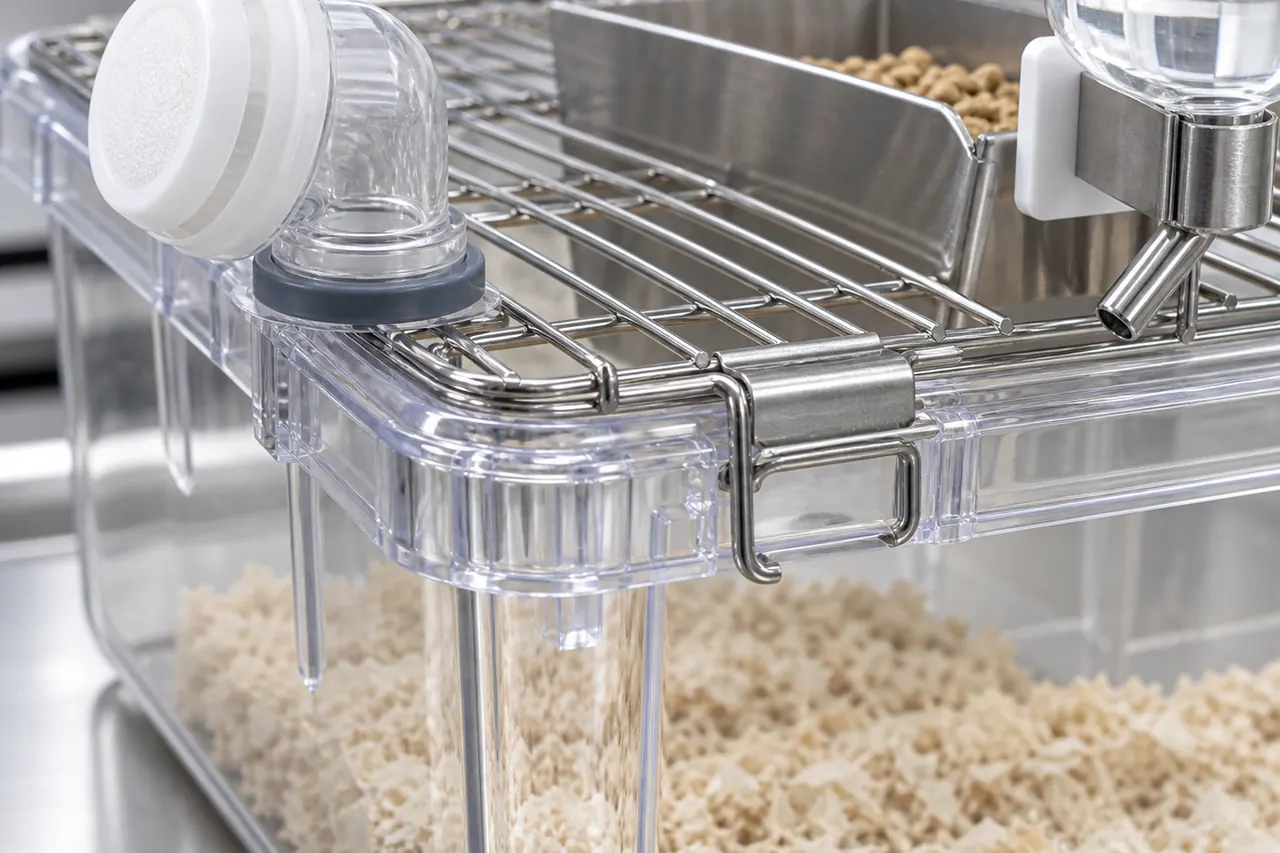
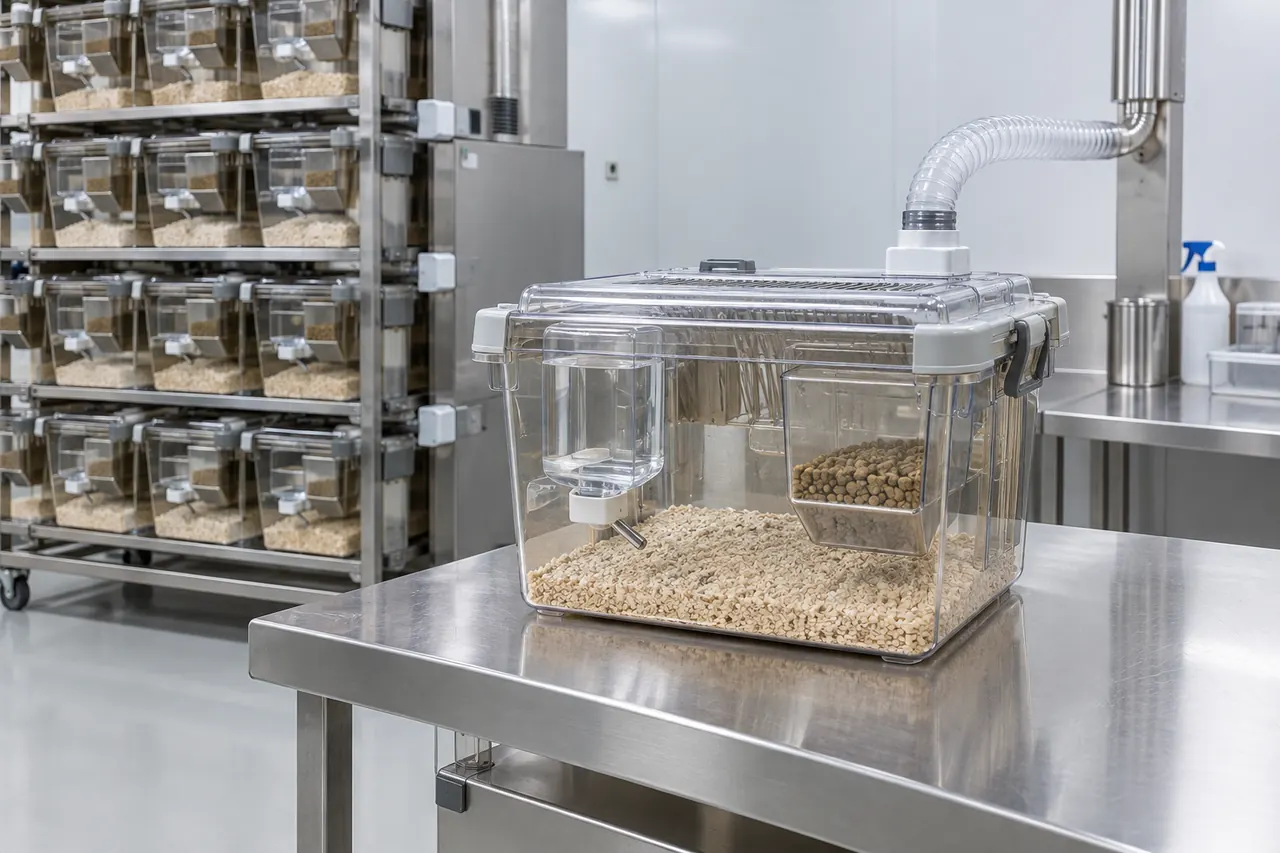
Open each view to review the layout, interfaces, access points, and configuration details.
Product overview
What this equipment is used for
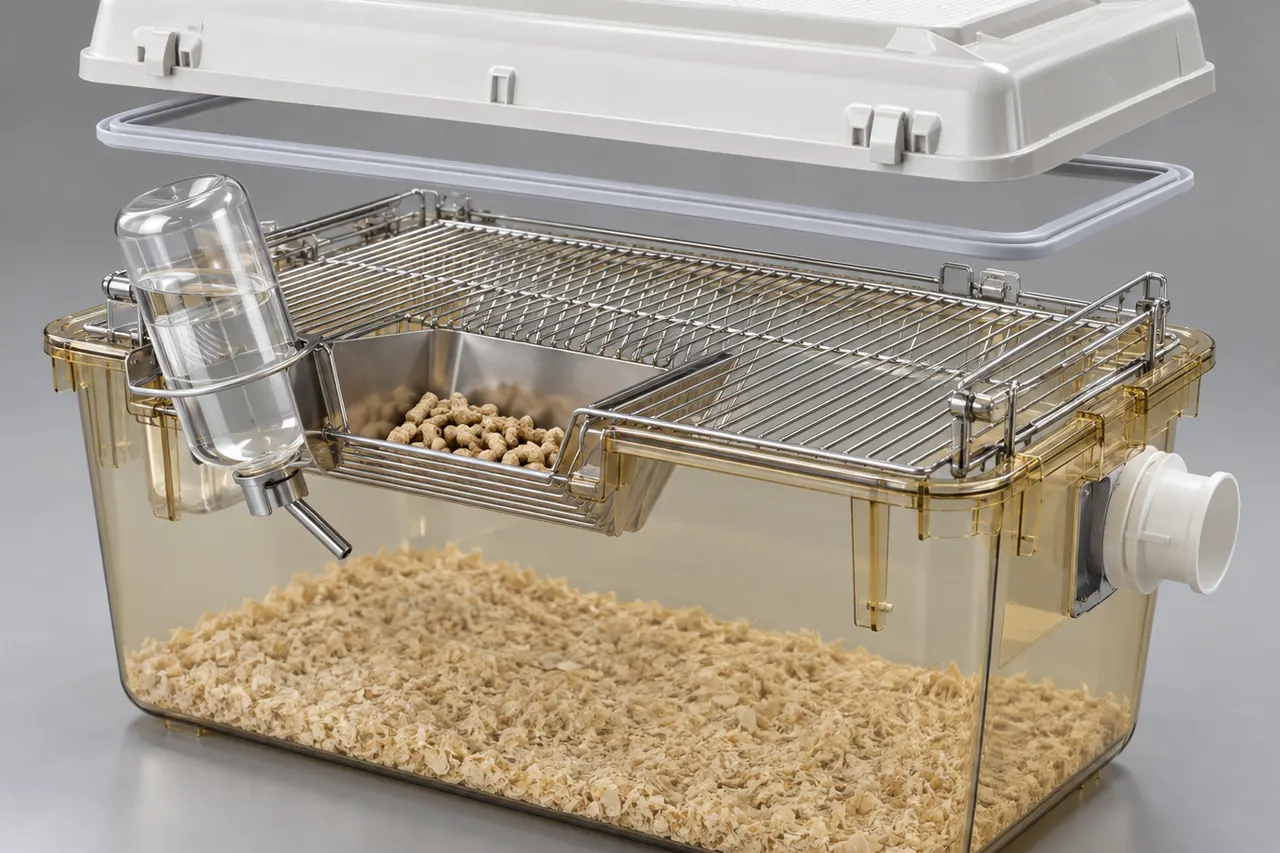
A mouse IVC cage contains the animals and connects to a compatible ventilation rack through a defined cage-and-rack interface. The cage body, top, filter, inlet and exhaust connection, food and water access, identification, enrichment, and handling must work as a coordinated enclosure.
Configuration basis
- Use context
- the ventilated mouse primary enclosure and its lid, filter, watering, rack-docking, bedding, and cage-change interfaces
- Equipment family
- IVC Cage Systems
- Final configuration
- Dimensions, utilities, and options are confirmed for the project.
Facility fit and configuration
Plan the product around the room and daily routine
Separate routine use from configuration decisions, then send the remaining room and purchasing details.
Use scenarios
Where the equipment fits
- 1Mouse housing in a compatible individually ventilated cage rack
- 2Replacement or expansion of cages within a defined IVC platform
- 3New rodent rooms coordinating cages, racks, change stations, and washing
- 4Programs comparing bottle, external bottle, or automatic watering interfaces
Configuration review
What changes the setup
- Define the mouse program, group composition, cage-change method, and microbiological objective.
- Confirm the exact cage-to-rack docking and airflow-interface compatibility.
- Review body, lid, filter, inlet and exhaust ports, feeder, and watering arrangement.
- Check usable space, observation, animal access, enrichment, identification, and escape control.
- Match cage components to change stations, transport carts, washers, and sterilization if required.
RFQ details
Complete the project brief
For a Mouse IVC Cage quote, provide the mouse program, cage census, rack and docking details, complete enclosure components, airflow intent, watering, change process, sanitation equipment, and spare strategy. Ask for written cage-to-rack compatibility and a clear boundary between cages, racks, controls, and accessories.
- Mouse program, cage census, grouping, and planned growth
- Existing or proposed IVC rack make-up and docking interface
- Cage body, lid, filter, feeder, and watering preference
- Positive, negative, or other airflow intent defined by the facility
Several related configurations can be reviewed under this product family. Final configuration, dimensions, utilities, and delivery scope are set during the quote and order process.
Buyer FAQ
Questions about Mouse IVC Cage
Quick answers for room planning, product comparison, and quotation preparation.
Mouse IVC Cage: is the cage interchangeable between rack systems?
Interchangeability should never be assumed. Cage dimensions, docking ports, seals, lid and filter arrangement, airflow path, watering, and rack retention can differ. Request written compatibility for the exact cage and rack combination.
Mouse IVC Cage: what belongs to the cage rather than the rack?
The cage typically includes the primary enclosure components such as body, lid or top, filter or barrier elements, feeder, and water interface. The rack provides support, docking, manifolds, and system-side ventilation functions. Final scope varies by offer.
Mouse IVC Cage: how does watering affect selection?
Bottle location or automatic watering changes the lid or port arrangement, operator access, daily checks, cage change, washing, rack clearance, and contingency plan. State the intended method at the start.
Mouse IVC Cage: what should be checked for cage washing?
Confirm separation of components, compatible racks or baskets, materials, filter and seal handling, washer loading, drying, inspection, reassembly, storage, and any sterilization step required by the program.
Mouse IVC Cage: how many spare cages are needed?
The facility should calculate spares from cage-change batches, washing and drying time, quarantine or contingency needs, damaged-component replacement, growth, and whether one platform must remain available during maintenance.
Related equipment
Related equipment to review
Check adjacent equipment that may affect room layout, utilities, and the quote request.
individually ventilated cage systems
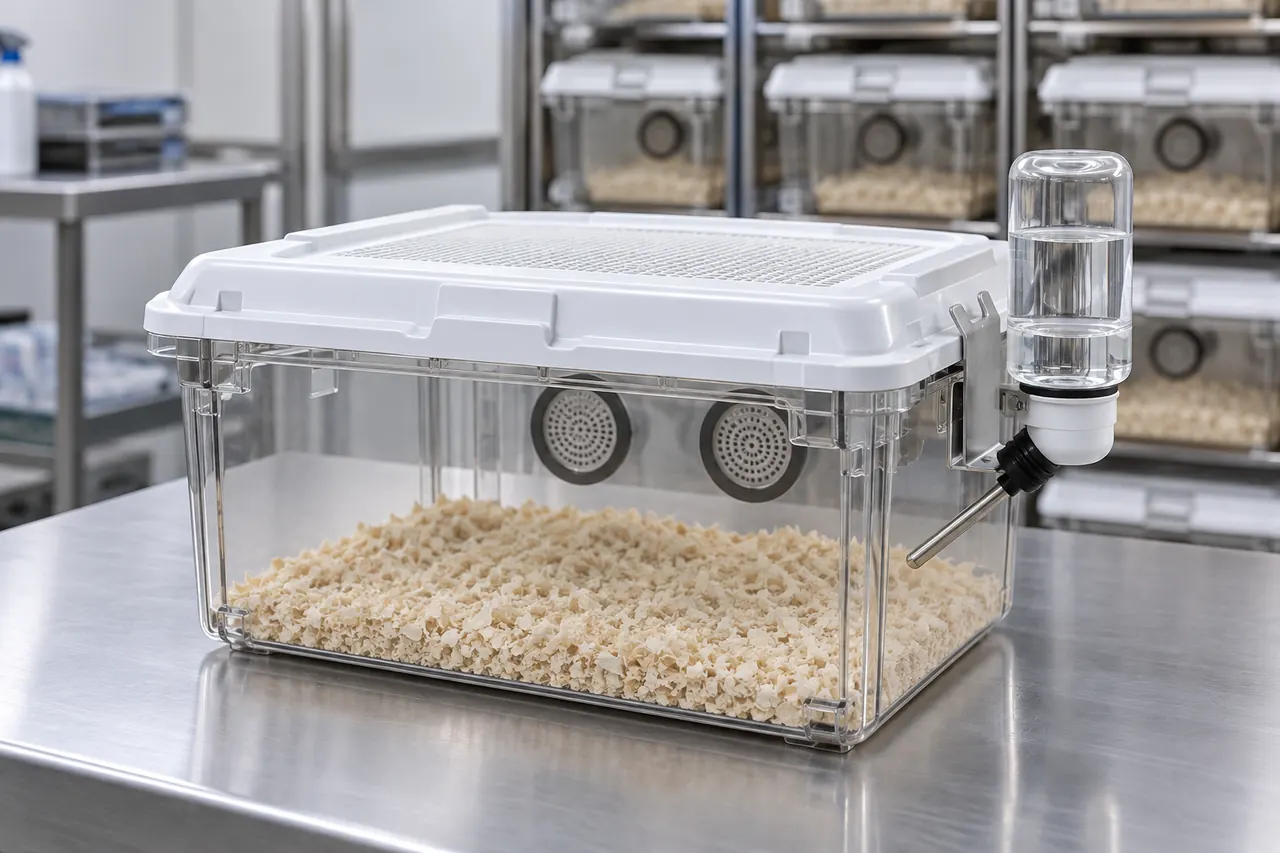
Mouse IVC Housing Cage for External Bottle Handling
Mouse IVC Housing Cage for External Bottle Handling supports planning for individually ventilated cage housing with coordinated racks, airflow, watering, and husbandry. Review species and cage format, rack capacity and room density, and airflow and protection objective before comparing configurations. Final construction, performance, compatibility, utilities, documentation, and delivery scope are confirmed for the quoted configuration.
Review family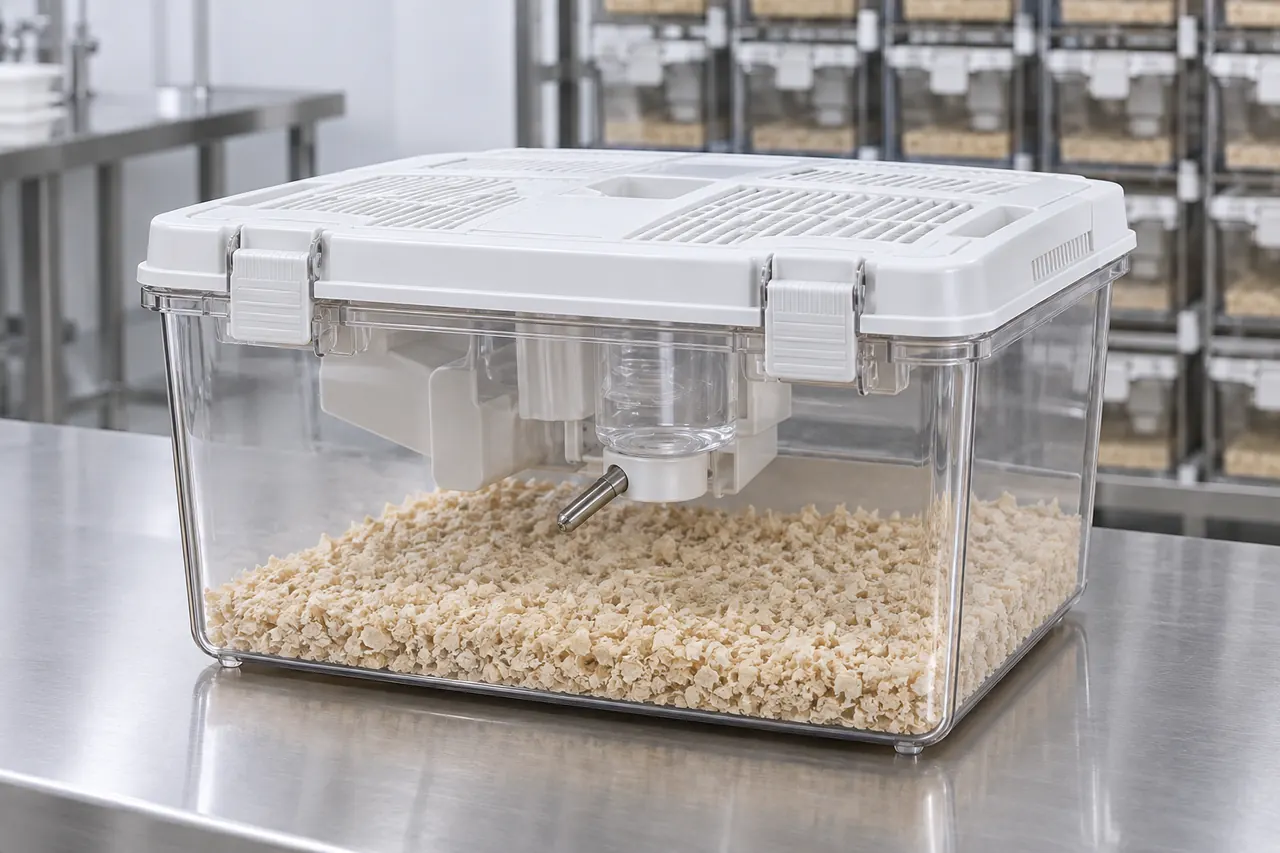
individually ventilated cage systems
Mouse IVC Housing Cage for Internal Bottle Handling
Mouse IVC Housing Cage for Internal Bottle Handling supports planning for individually ventilated cage housing with coordinated racks, airflow, watering, and husbandry. Review species and cage format, rack capacity and room density, and airflow and protection objective before comparing configurations. Final construction, performance, compatibility, utilities, documentation, and delivery scope are confirmed for the quoted configuration.
Review family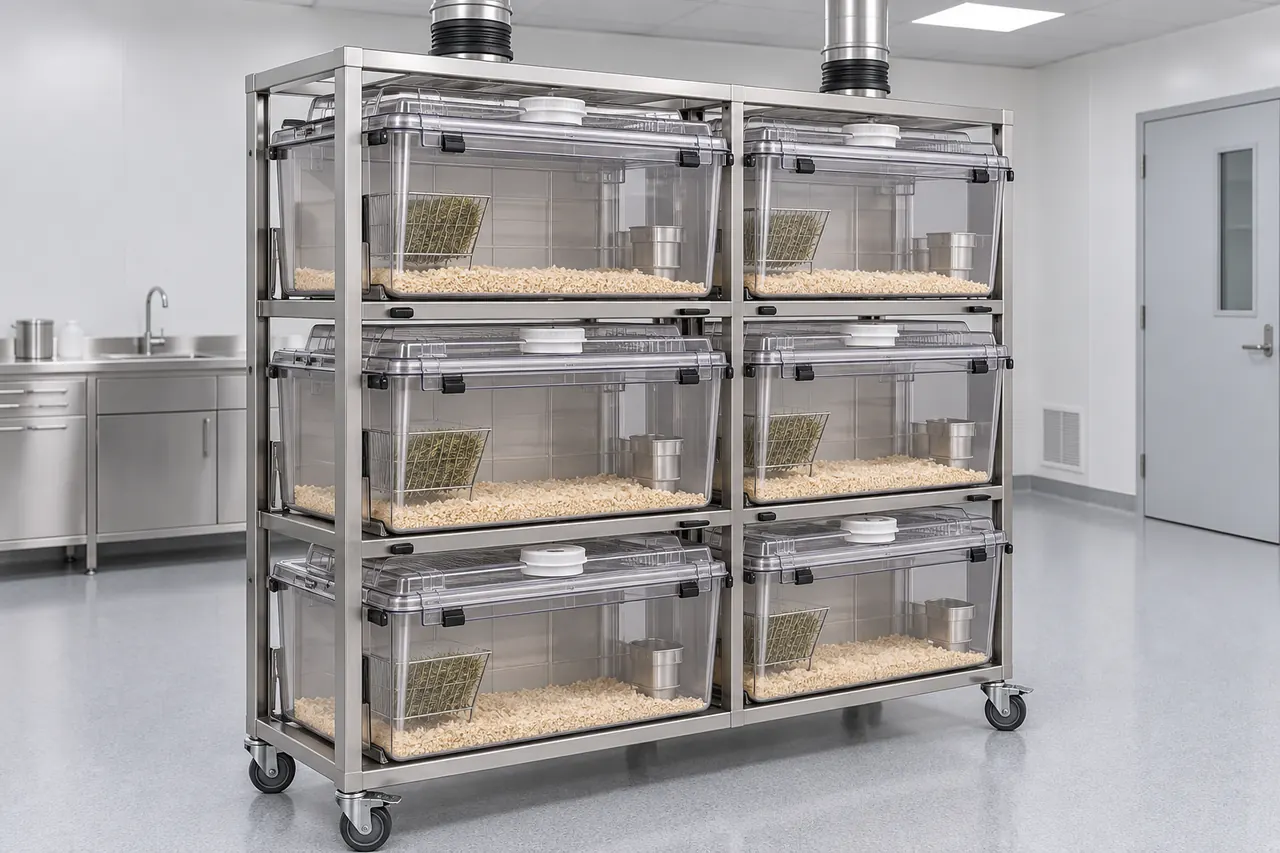
individually ventilated cage systems
Guinea Pig IVC Housing Cage
Guinea Pig IVC Housing Cage supports planning for individually ventilated cage housing with coordinated racks, airflow, watering, and husbandry. Review species and cage format, rack capacity and room density, and airflow and protection objective before comparing configurations. Final construction, performance, compatibility, utilities, documentation, and delivery scope are confirmed for the quoted configuration.
Review family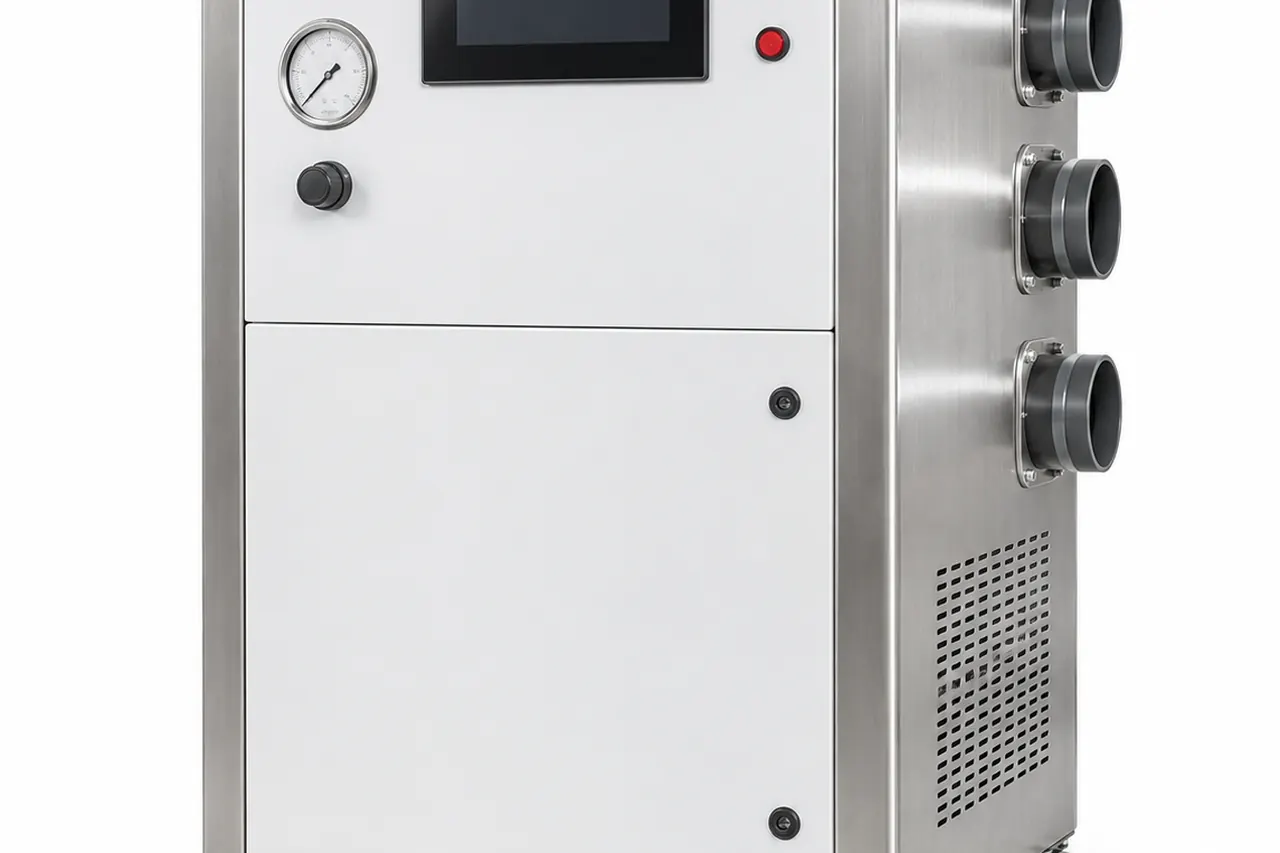
individually ventilated cage systems
IVC System Controller
IVC System Controller supports planning for individually ventilated cage housing with coordinated racks, airflow, watering, and husbandry. Review species and cage format, rack capacity and room density, and airflow and protection objective before comparing configurations. Final construction, performance, compatibility, utilities, documentation, and delivery scope are confirmed for the quoted configuration.
Review familyRelated resources
Go deeper with planning resources for Mouse IVC Cage
FAQ
FAQ library
What is an IVC cage system?
Understand how individually ventilated cage systems are reviewed for cage family, rack layout, controller direction, bottle handling, and room layout before requesting a quote.
What room information is needed for an IVC cage system quote?
Prepare room size, rack count, cage quantity, service aisle, bottle handling preference, utilities, and cleaning route notes before requesting an IVC cage system quote.
How should buyers compare internal and external bottle handling for IVC cages?
Compare internal and external bottle handling by animal care routine, cage change process, washing route, operator access, and project details.
Guides
Buyer guides
IVC Cage System Selection Guide
Compare IVC cage systems by animal species, cage family, controller direction, rack layout, bottle handling, pressure intent, and quote-ready room details.
IVC Cage Room Layout Guide
Use room dimensions, rack count, cage quantity, access clearance, door openings, and clean or dirty route notes to prepare an IVC layout discussion.
IVC Internal and External Bottle Handling Guide
Review internal and external bottle handling by daily care, cage access, washroom route, bottle preparation, and related IVC equipment.
Solutions
Solution references
IVC Cage System for New Animal Room Planning
Plan a new animal room around IVC cage families, controller direction, rack rows, bottle handling, operator aisles, and adjacent washing or support areas.
IVC Cage System Replacement Planning for Existing Rooms
Review existing room constraints, rack movement, cage quantity, bottle handling, service access, and transition timing when replacing IVC equipment.
IVC Cage System Daily Animal Care Planning
Connect cage access, bottle handling, observation, cage change route, washing handoff, and support equipment around an IVC cage system.