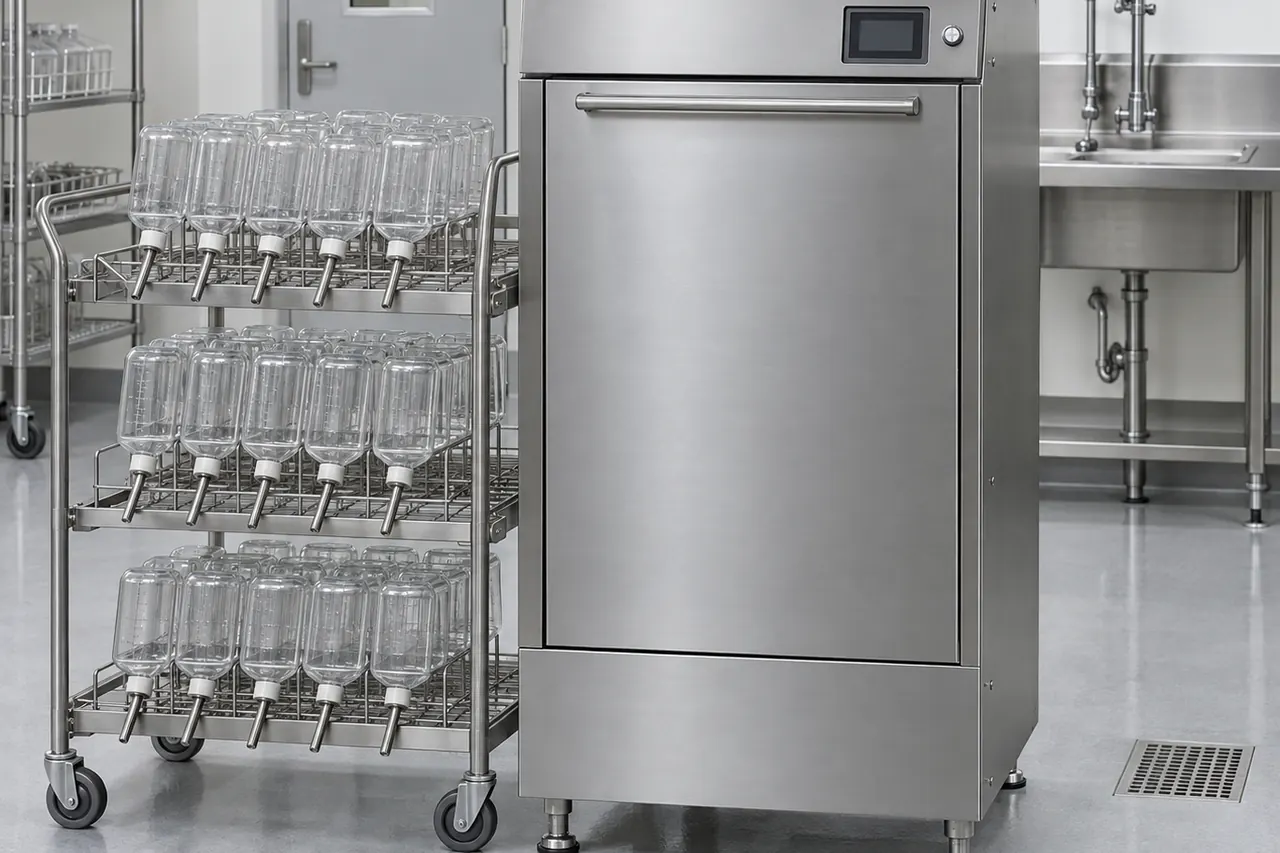
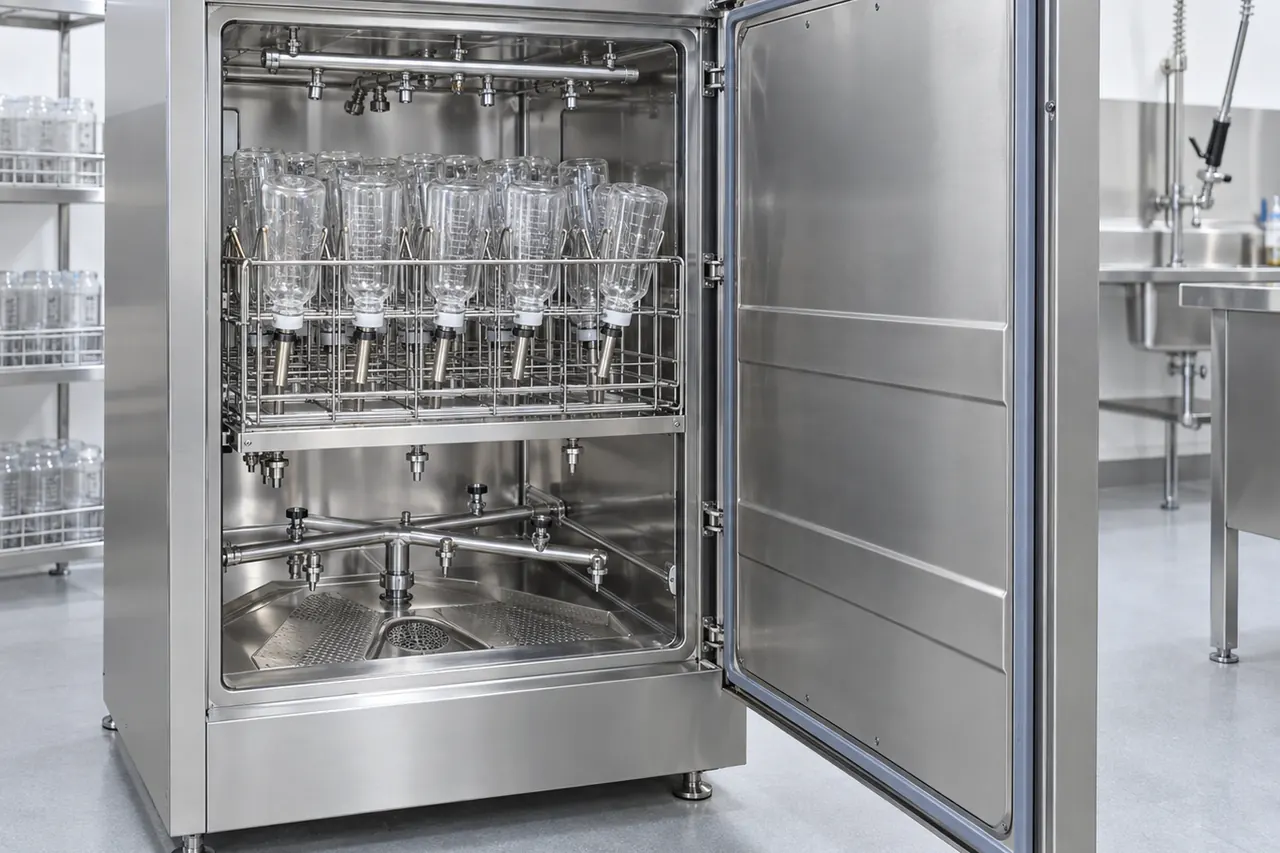
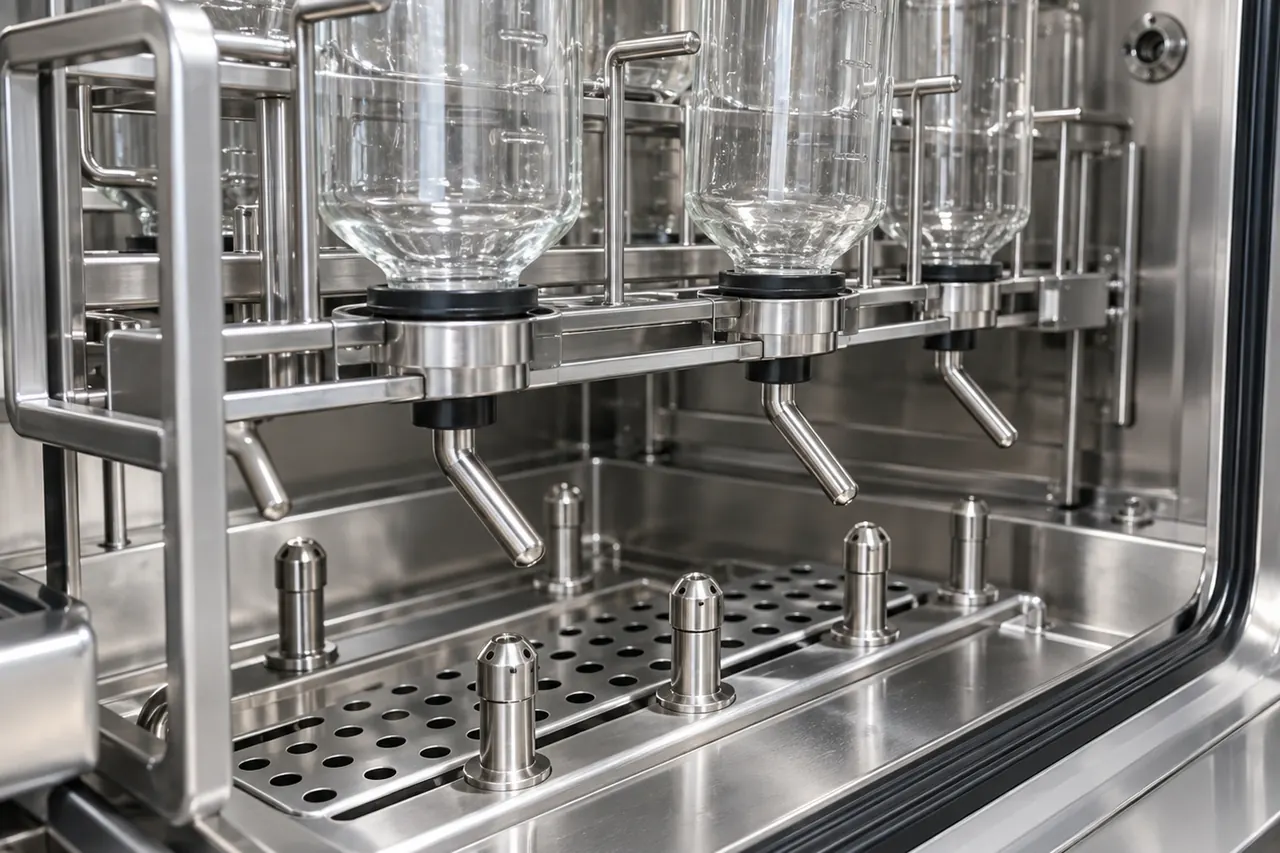
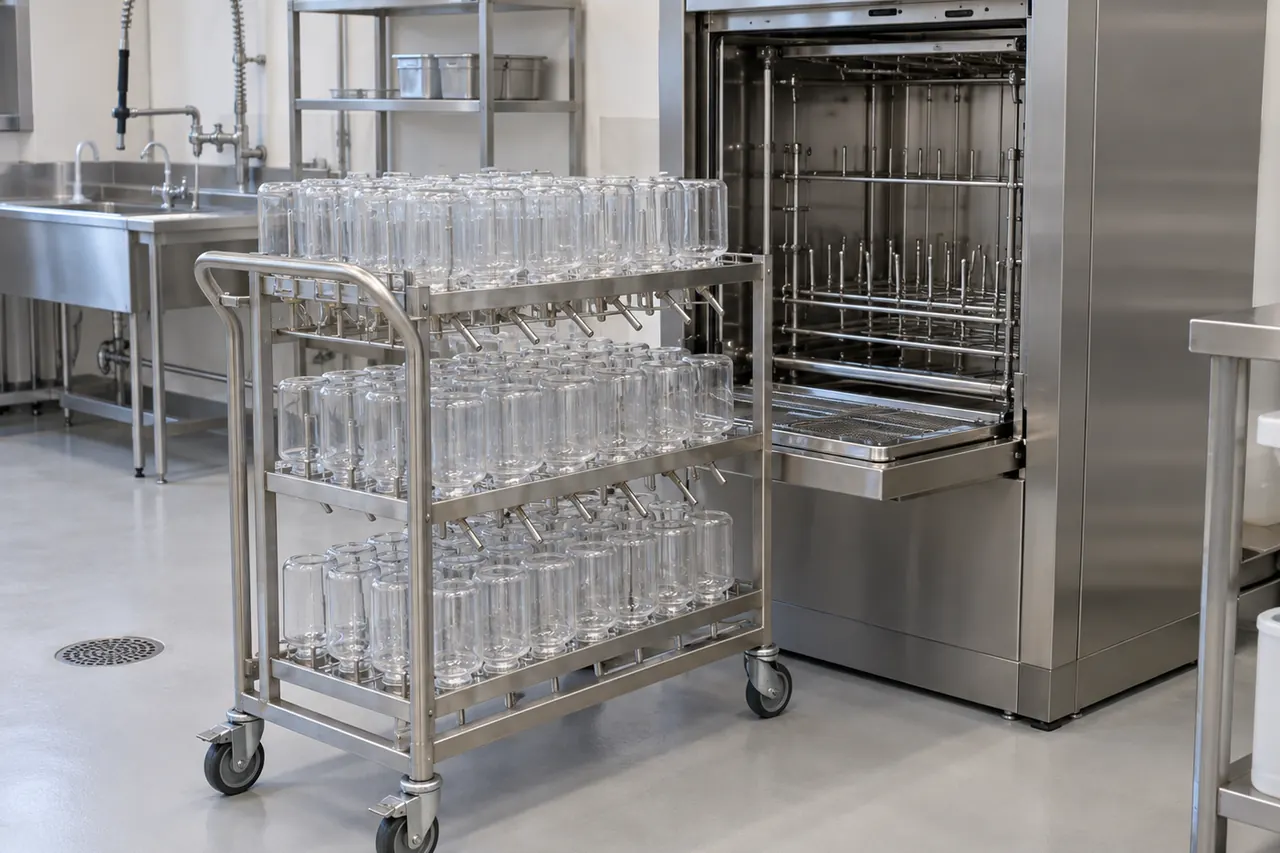
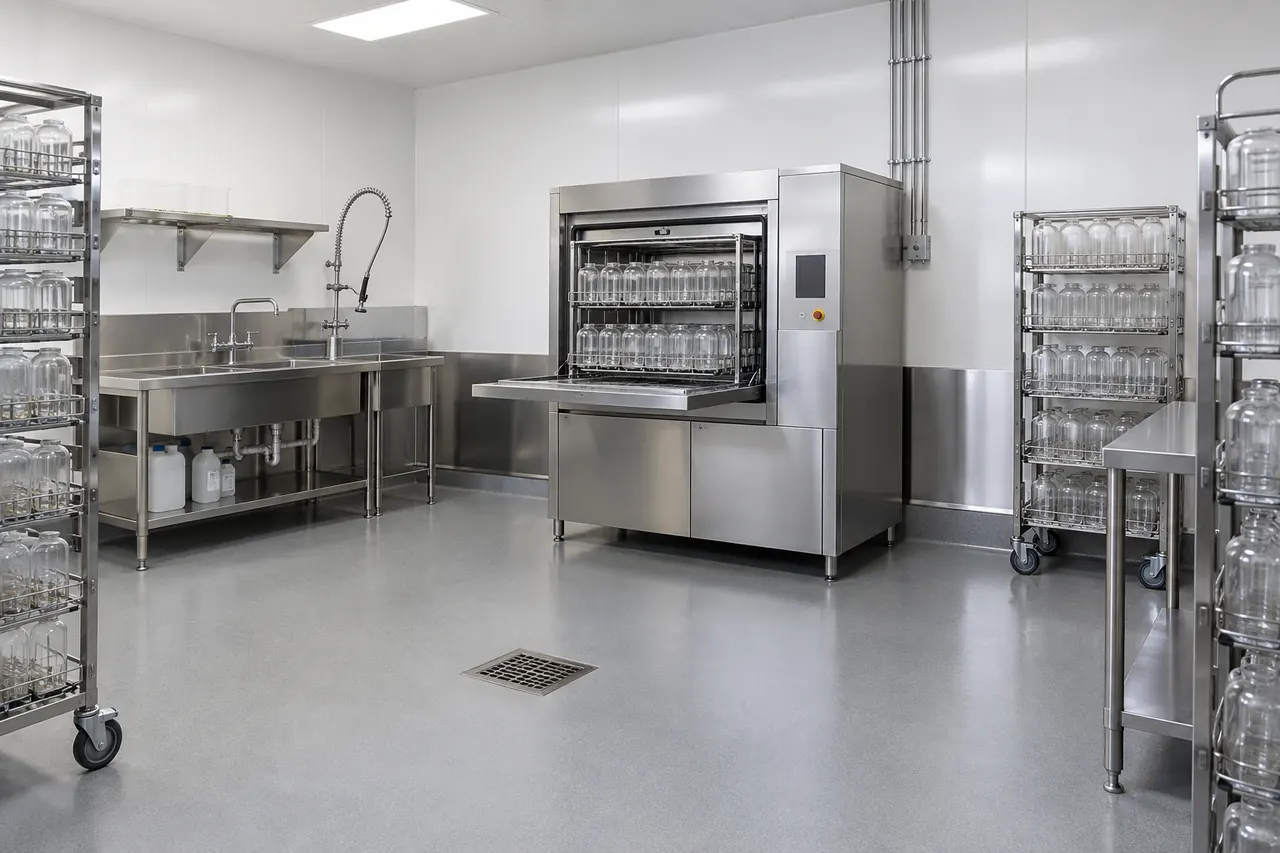
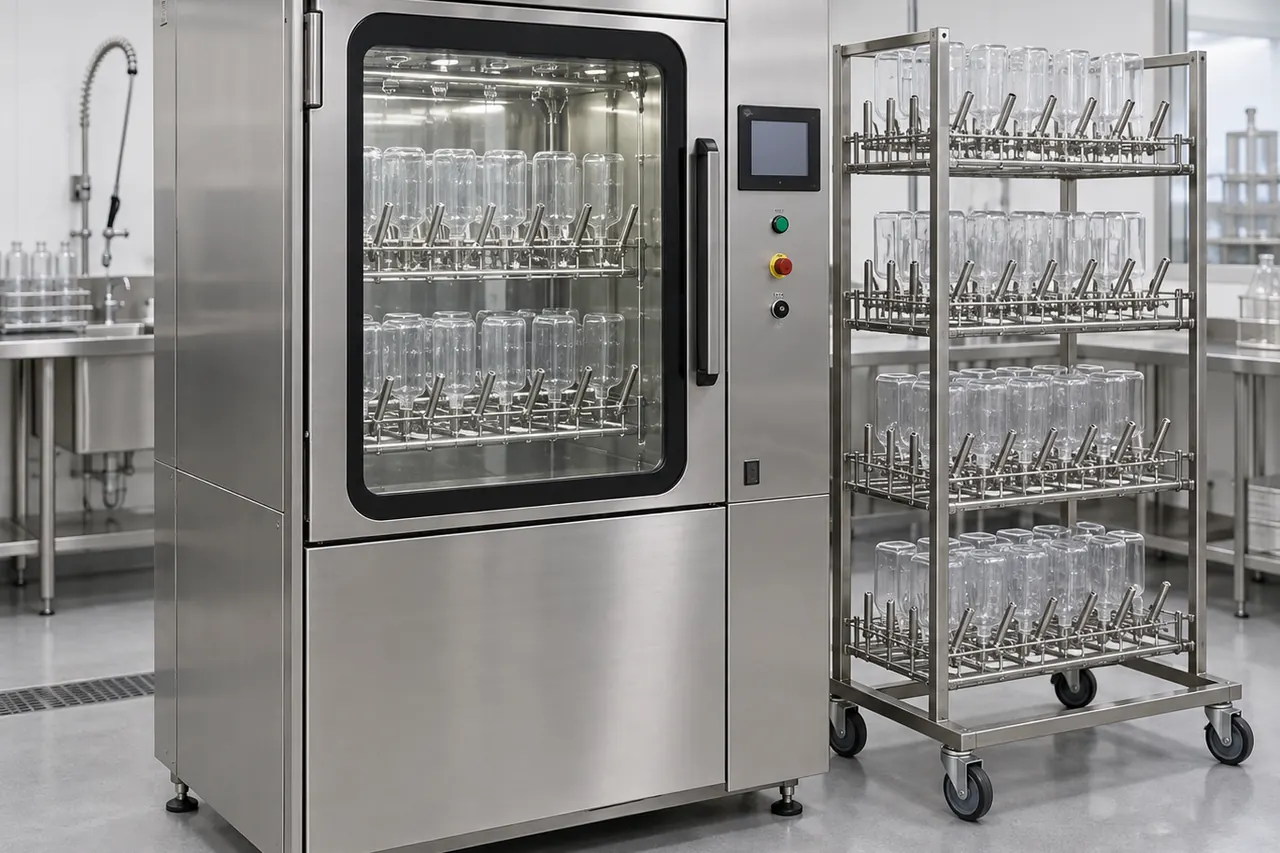
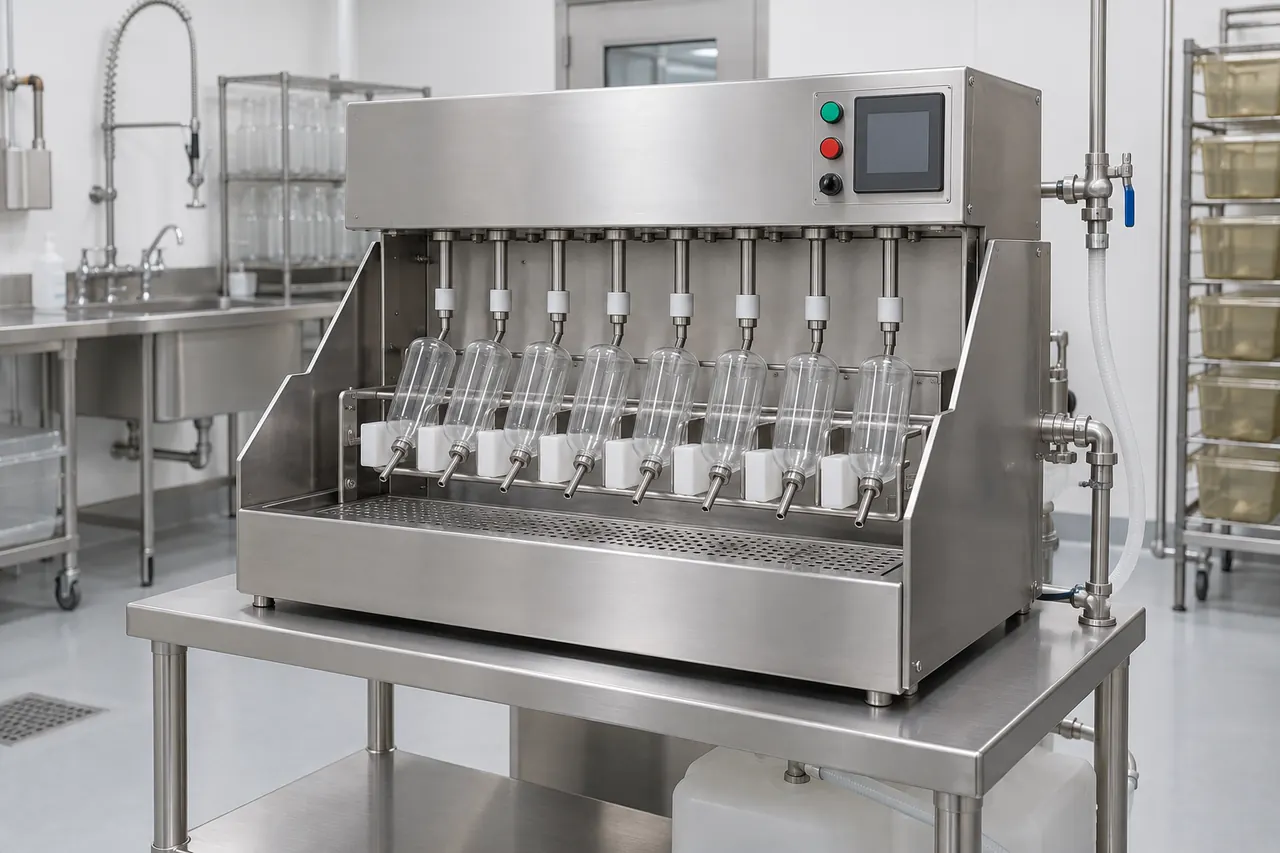
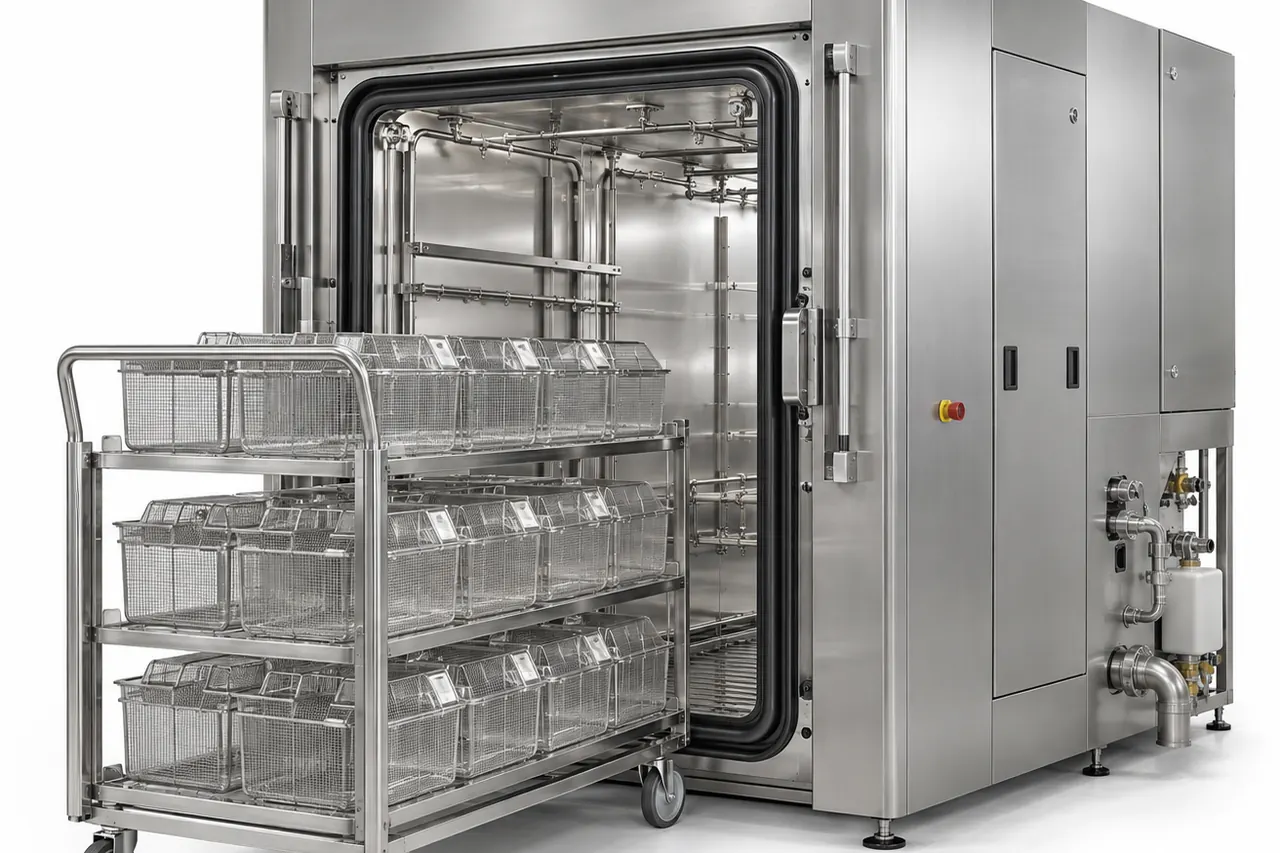
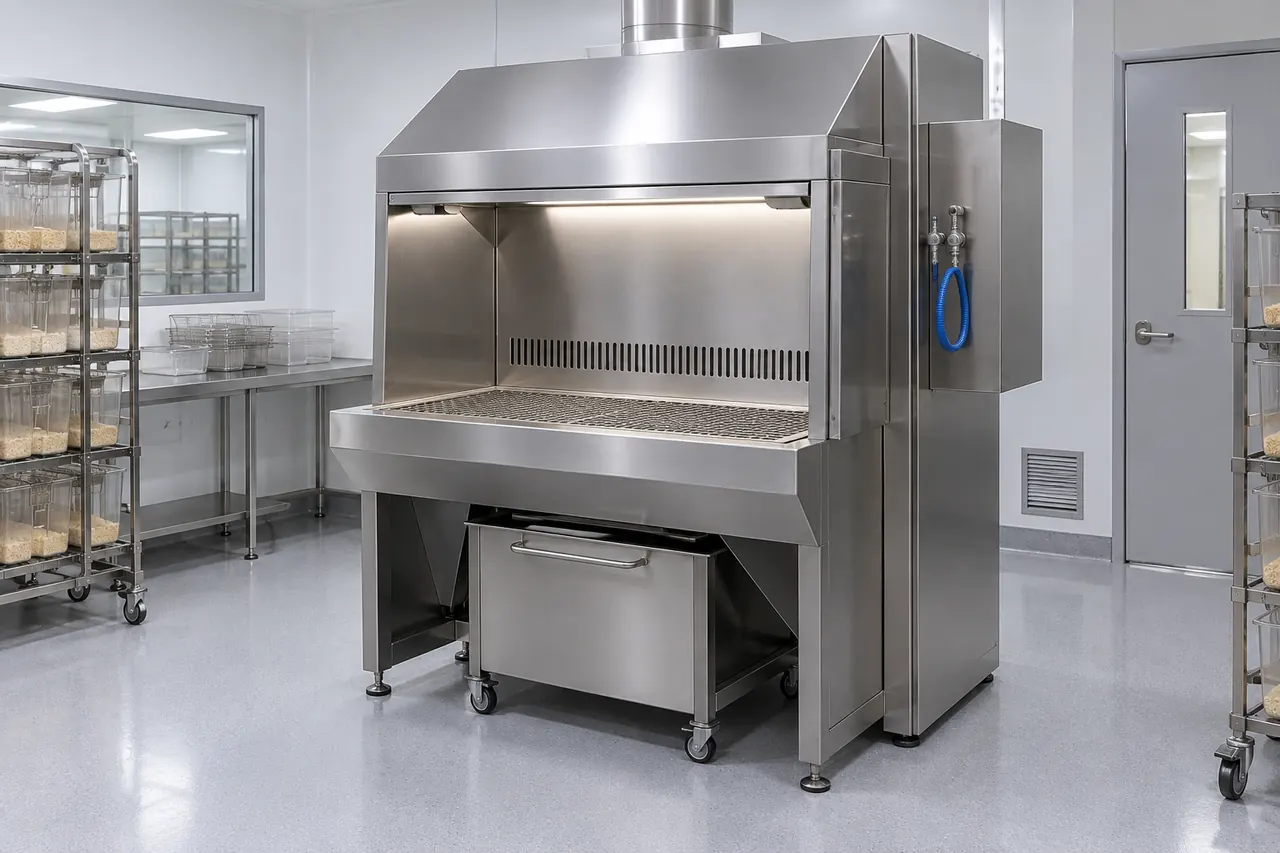
Water Bottle Washer complete product overview

Cage and Bottle Washers

Water Bottle Washer

Water Bottle Washer planning starts with the bottle and closure inventory, rack or basket orientation, soil condition, sanitation objective, and clean-side handling after the cycle.

Room fitwashing bottles, sipper tubes, stoppers, and small watering components in defined carriersProduct overview

Product overview

What this equipment is used for

A water bottle washer is configured around small watering components and their carriers. Bottle inversion, internal surface access, sipper-tube and stopper handling, drainage, unloading, and post-wash storage should be reviewed as one workflow even when filling is supplied separately.

Configuration basis

Use context
washing bottles, sipper tubes, stoppers, and small watering components in defined carriers
Equipment family
Cage and Bottle Washers
Final configuration
Dimensions, utilities, and options are confirmed for the project.

Facility fit and configuration

Plan the product around the room and daily routine

Separate routine use from configuration decisions, then send the remaining room and purchasing details.

Use scenarios

Where the equipment fits

  • 1Dedicated processing of reusable laboratory animal drinking bottles
  • 2Washer replacement where existing bottle racks or baskets may be retained
  • 3Bottle rooms separating washing from filling and closure assembly
  • 4Facilities processing bottles, sipper tubes, stoppers, and related small parts

Configuration review

What changes the setup

  • List bottle materials, dimensions, neck openings, and maximum soil condition.
  • Confirm bottle orientation and the rack or basket geometry used during washing.
  • Define how sipper tubes, stoppers, and small parts are contained and separated.
  • State the sanitation objective, monitoring method, and required cycle record.
  • Review unloading temperature, drainage, drying, inspection, and clean storage.

RFQ details

Complete the project brief

For a Water Bottle Washer quote, provide the bottle and small-component set together with carrier details, quantities, soil condition, sanitation expectations, and the washroom drawing. Ask the supplier to distinguish compatible carriers, cycle scope, utilities, records, and any separate filling or closure equipment.

  • Bottle, stopper, and sipper-tube samples or drawings
  • Bottle count and small-component count per shift
  • Current or proposed wash racks and baskets
  • Soil condition, pre-rinse, and detergent expectations
Request a quote

Several related configurations can be reviewed under this product family. Final configuration, dimensions, utilities, and delivery scope are set during the quote and order process.

Buyer FAQ

Questions about Water Bottle Washer

Quick answers for room planning, product comparison, and quotation preparation.

Water Bottle Washer: can bottles and sipper tubes be washed together?

They may require different carriers and exposure to the wash process. Describe each component and ask the supplier to show the loading arrangement, separation method, and compatible cycle rather than assuming loose small parts can share a bottle rack.

Water Bottle Washer: why does bottle orientation matter?

Orientation affects emptying, access to internal surfaces, drainage, and unloading. Provide the actual bottle and proposed rack so the washing and post-cycle handling can be reviewed together.

Water Bottle Washer: does the machine also fill bottles?

Washing and filling are separate functions unless the quotation explicitly combines them. Confirm whether the offer includes only washing or also transfer, filling, closure assembly, inspection, and clean-side staging.

Water Bottle Washer: how should sanitation results be reviewed?

The facility should define its monitoring method and acceptance record based on the bottle process and animal-care program. Ask how the selected machine records relevant cycle conditions and how routine checks are performed.

Water Bottle Washer: what usually changes the quoted configuration?

Bottle and carrier geometry, small-part handling, load quantity, cycle expectations, utilities, room-side arrangement, controls, drying or cooling needs, and documentation can all change scope.

Related resources

Go deeper with planning resources for Water Bottle Washer

FAQ

FAQ library

Water Bottle Washer: can bottles and sipper tubes be washed together?

They may require different carriers and exposure to the wash process. Describe each component and ask the supplier to show the loading arrangement, separation method, and compatible cycle rather than assuming loose small parts can share a bottle rack.

Water Bottle Washer: why does bottle orientation matter?

Orientation affects emptying, access to internal surfaces, drainage, and unloading. Provide the actual bottle and proposed rack so the washing and post-cycle handling can be reviewed together.

Water Bottle Washer: does the machine also fill bottles?

Washing and filling are separate functions unless the quotation explicitly combines them. Confirm whether the offer includes only washing or also transfer, filling, closure assembly, inspection, and clean-side staging.

Guides

Buyer guides

Water Bottle Washer bottle-and-carrier compatibility guide

Match each bottle, stopper, and sipper component to a defined rack or basket and record orientation, quantity, and changeover needs.

Water Bottle Washer clean-side handling checklist

Plan unloading, cooling, drainage, inspection, storage, and transfer to filling without treating the wash cycle as the entire process.

Water Bottle Washer quotation comparison worksheet

Compare compatible loads, carriers, cycle scope, utilities, monitoring records, and excluded filling or closure steps on one basis.

Solutions

Solution references

Water Bottle Washer for separate wash and fill rooms

Define the clean transfer and buffer between bottle washing and filling so carriers, storage, and operator handling stay coordinated.

Water Bottle Washer for mixed bottle families

Group bottles by neck, body, material, and carrier fit, then identify shared racks and format-specific change parts.

Water Bottle Washer for small-component control

Add dedicated baskets and identification for stoppers and sipper tubes to reduce loss, mixing, and uncertain exposure.