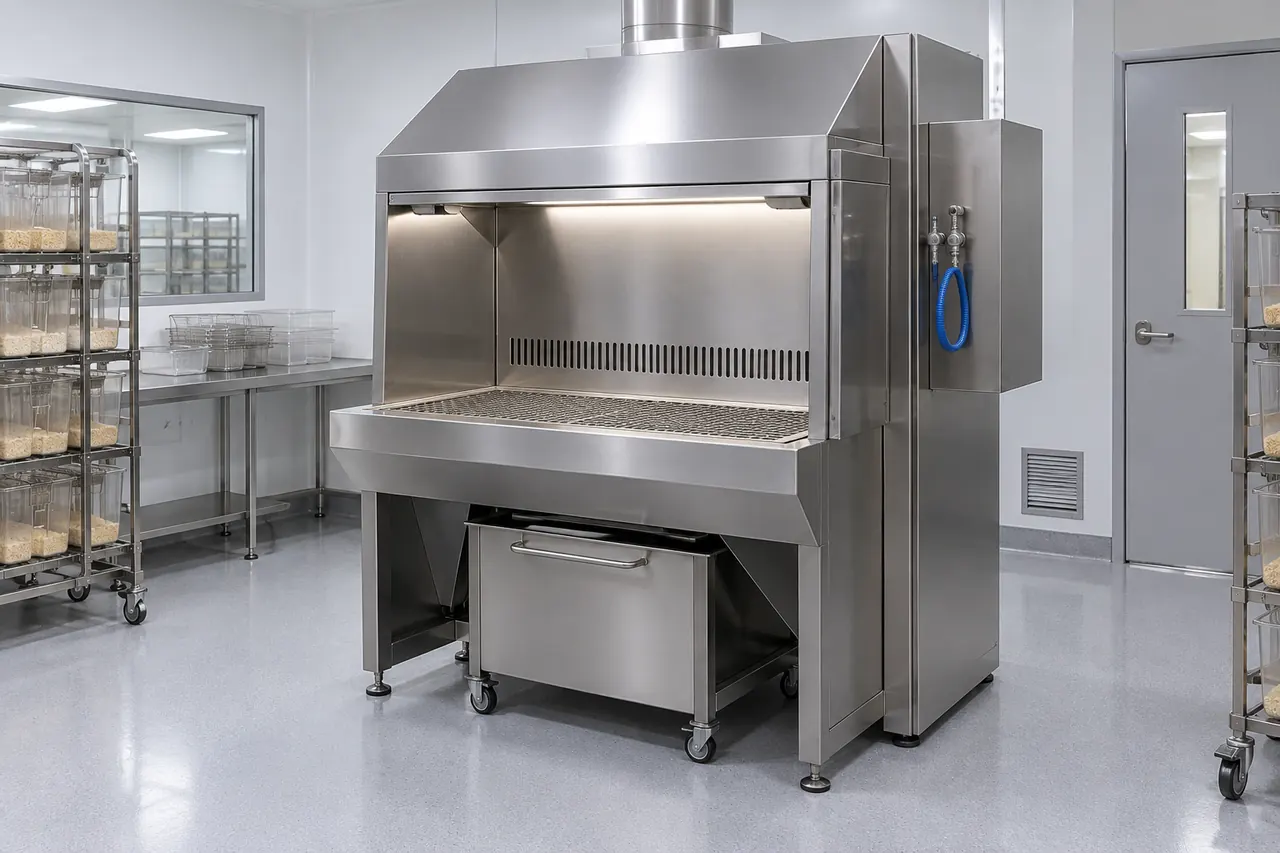
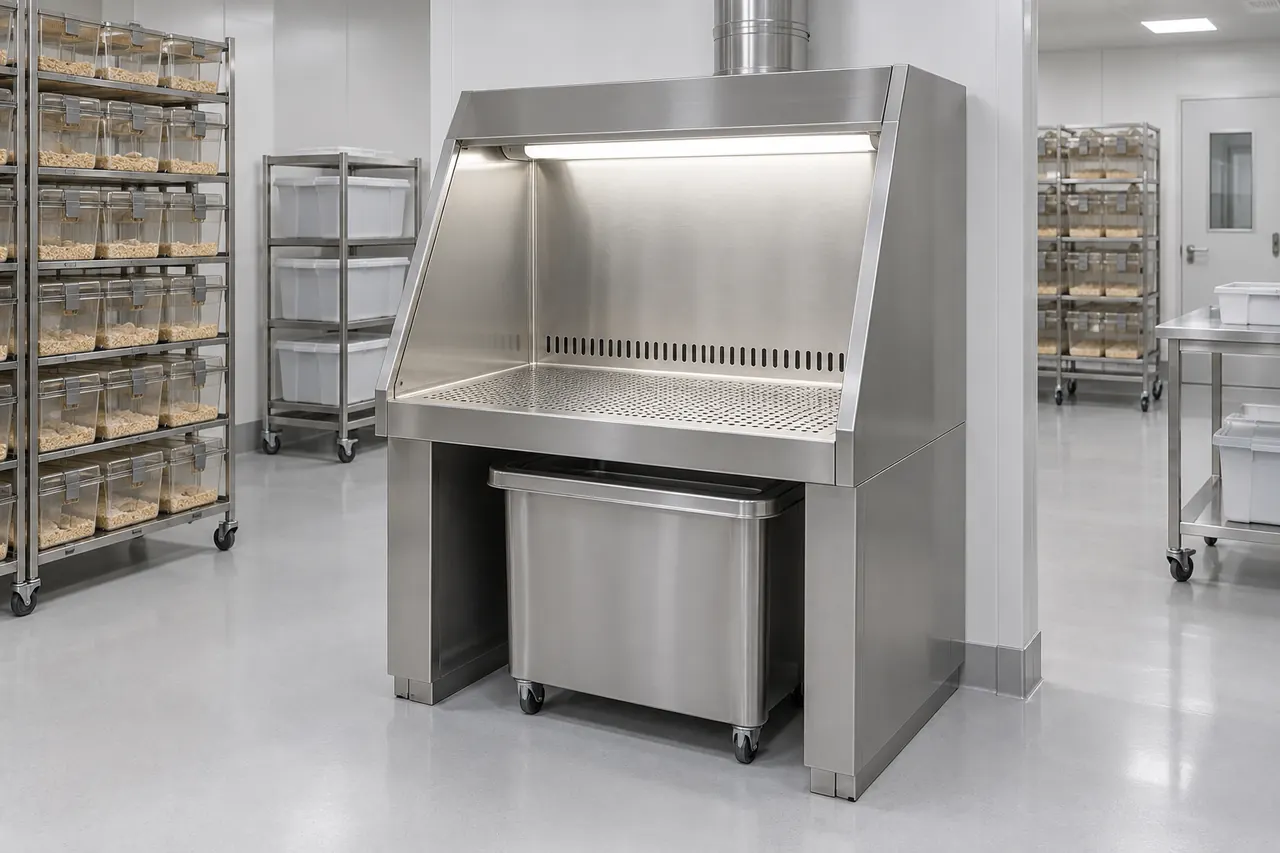
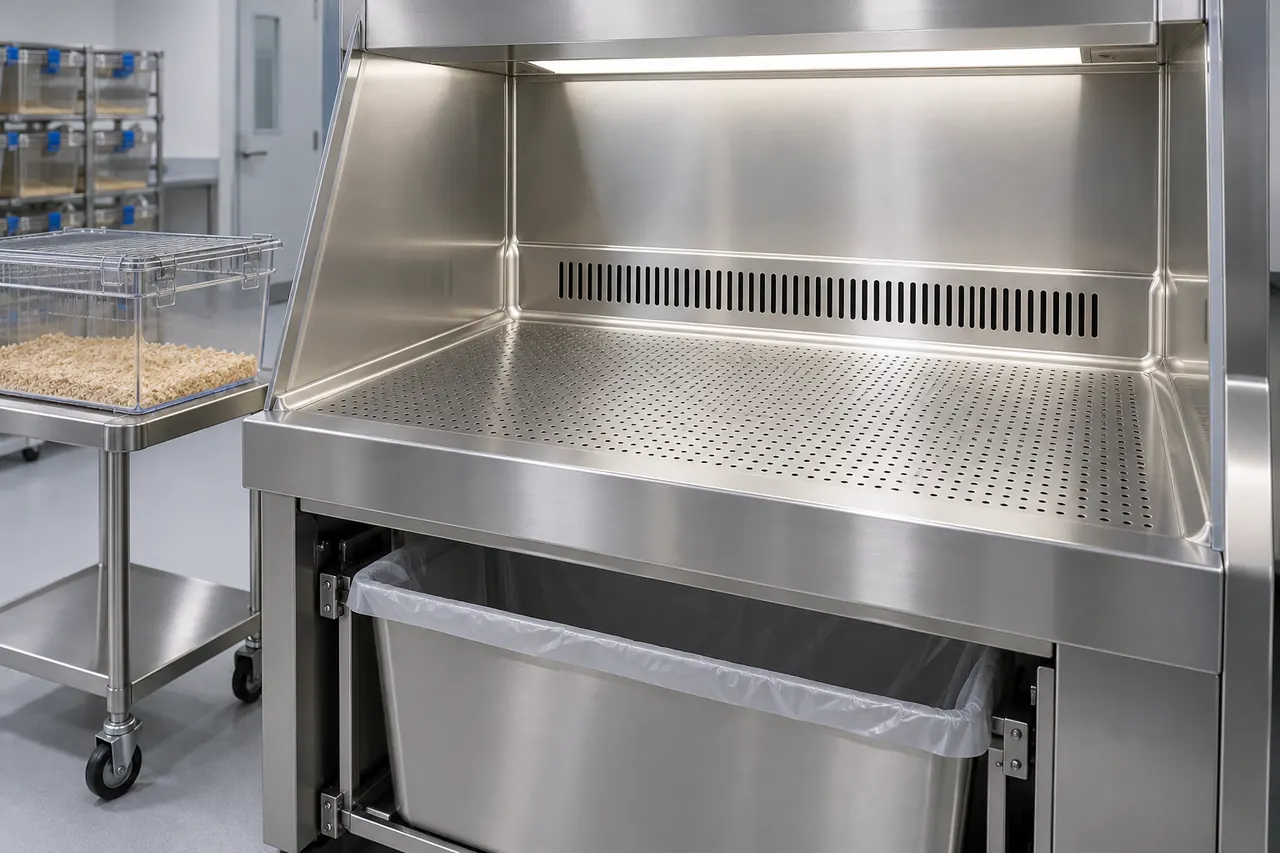
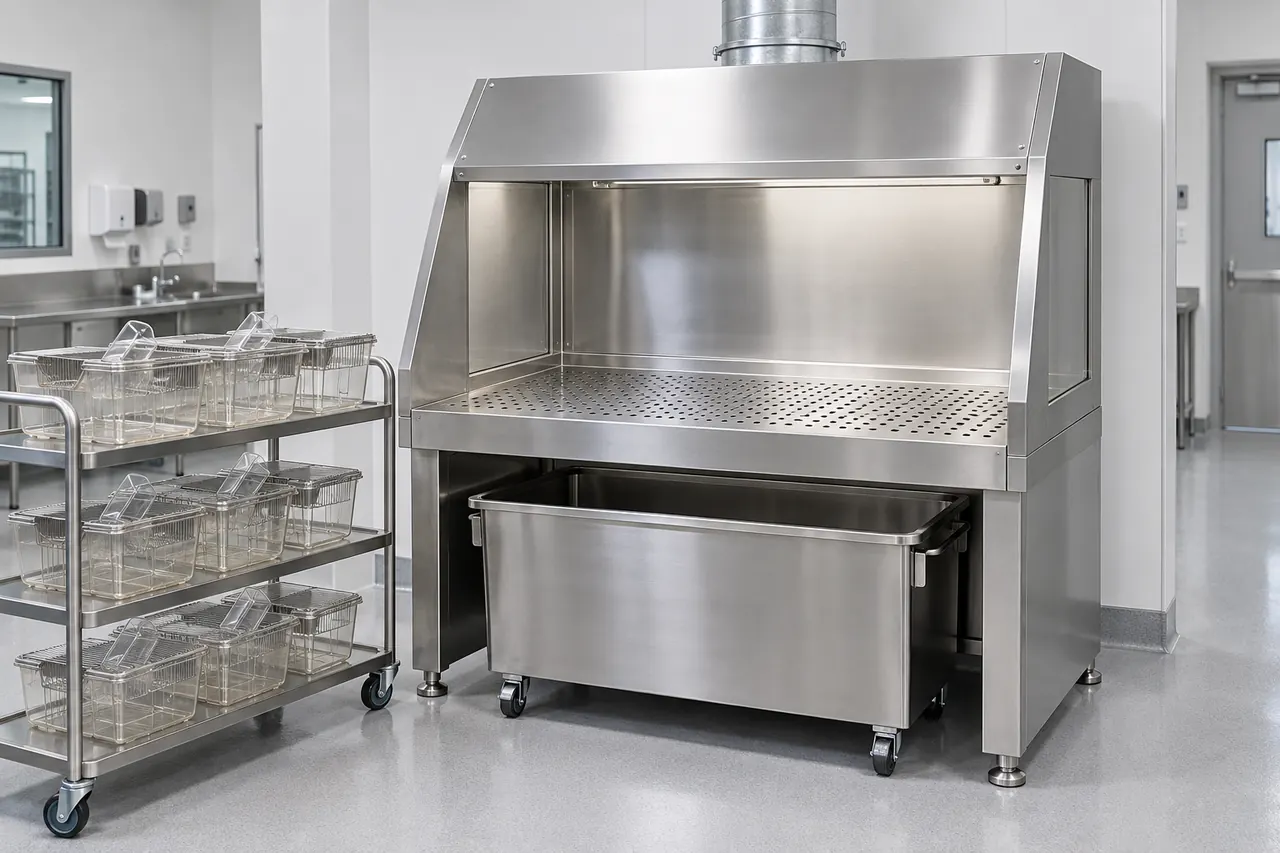
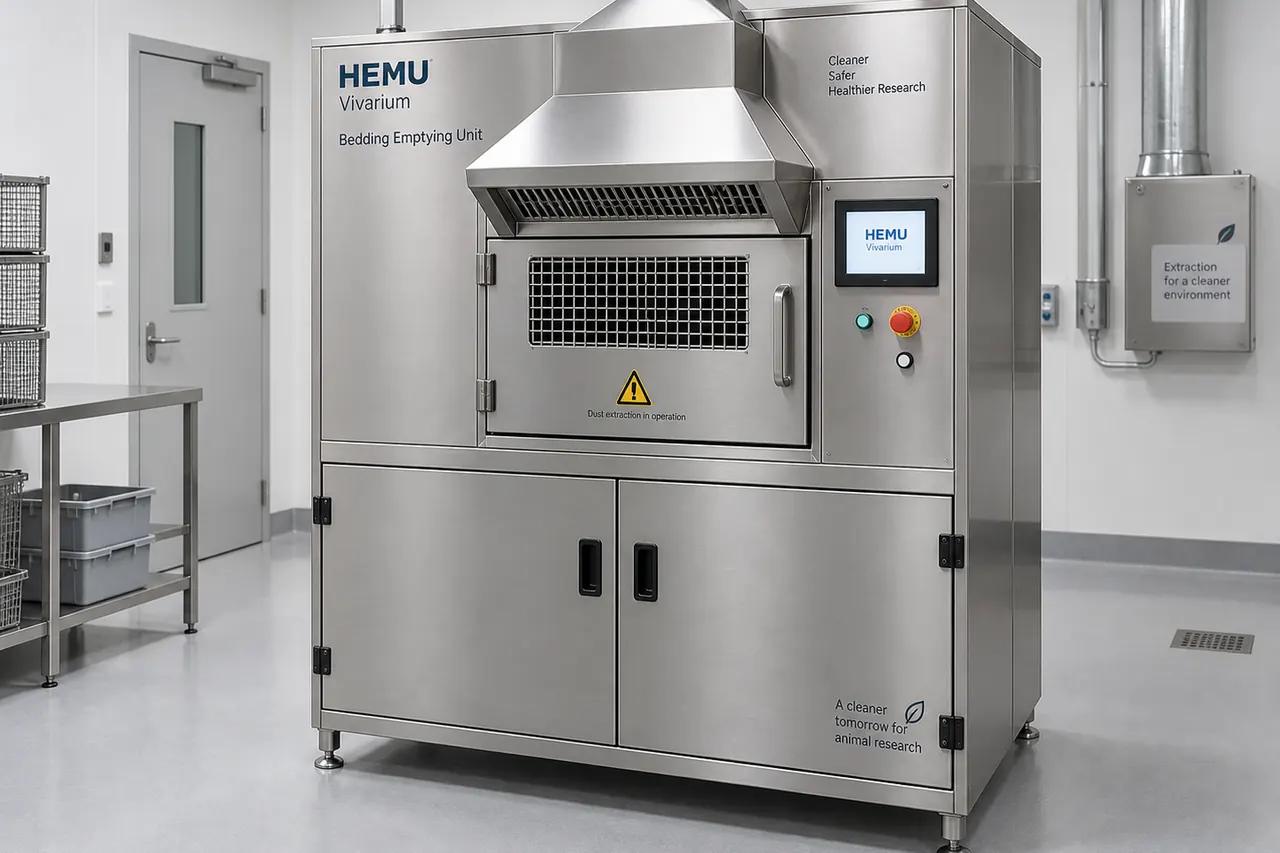
Bedding Collection Station: How do I buy or request a quote for a laboratory animal bedding collection station?+
For a useful Bedding Collection Station quotation, provide clean or soiled process, bedding type, cage count and target throughput, dust or hazard assessment, bag, bin, or hopper interface, room exhaust and power, and cleaning and documentation needs. Ask the supplier to list included equipment, exclusions, utilities, documentation, delivery scope, and the items that still require confirmation.
Bedding Collection Station: What is the difference between a bedding collection, disposal, dump, and cabinet station?+
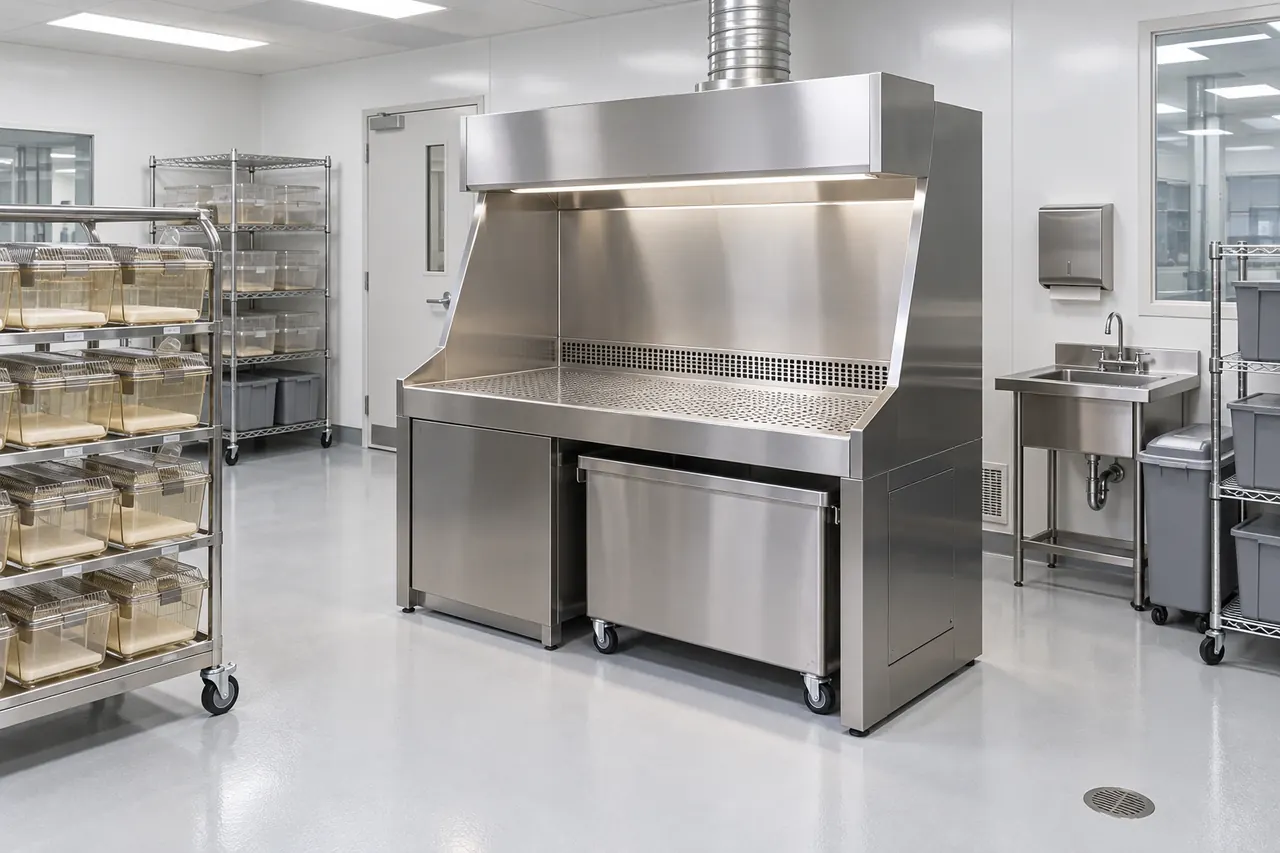
Compare Bedding Collection Station with an alternative by using the same decision criteria: clean or soiled process position, bedding type and bulk density, cage count and throughput, dust, allergen, or hazard control, hopper, bag, or waste interface, and cleaning and ergonomic workflow. The preferred option is the one that matches the protection objective, animal and operator workflow, room interfaces, sanitation process, and required documentation; a similar product name does not prove equivalence.
Bedding Collection Station: How does the station control bedding dust, allergens, and dander?+
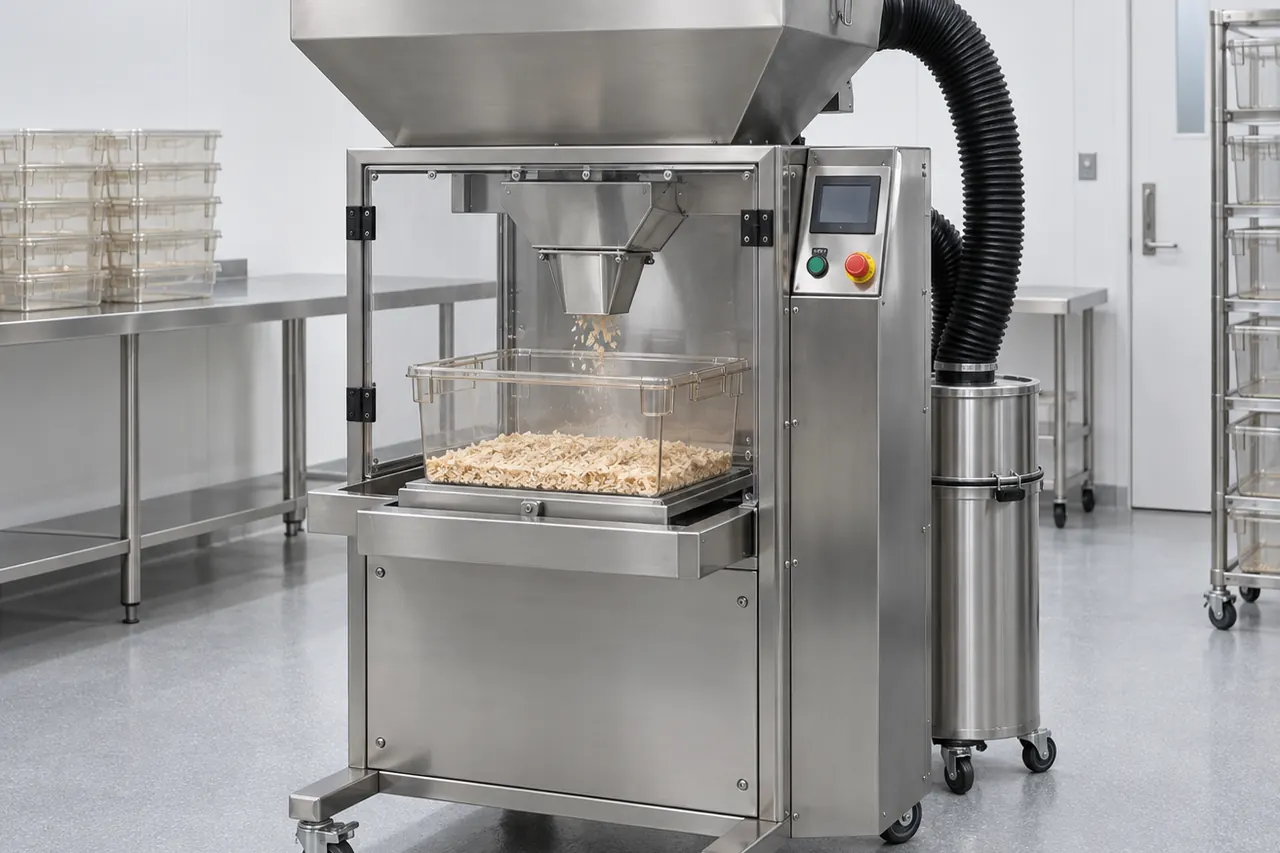
The answer for Bedding Collection Station depends on the selected configuration and intended operating process. Compare the relevant dimensions, interfaces, utilities, cleaning method, accessories, and operating limits. Ask for a product-specific technical submittal that clearly lists the supplied components and applicable options.
Bedding Collection Station: Which bags, bins, containers, and waste routes are compatible?+
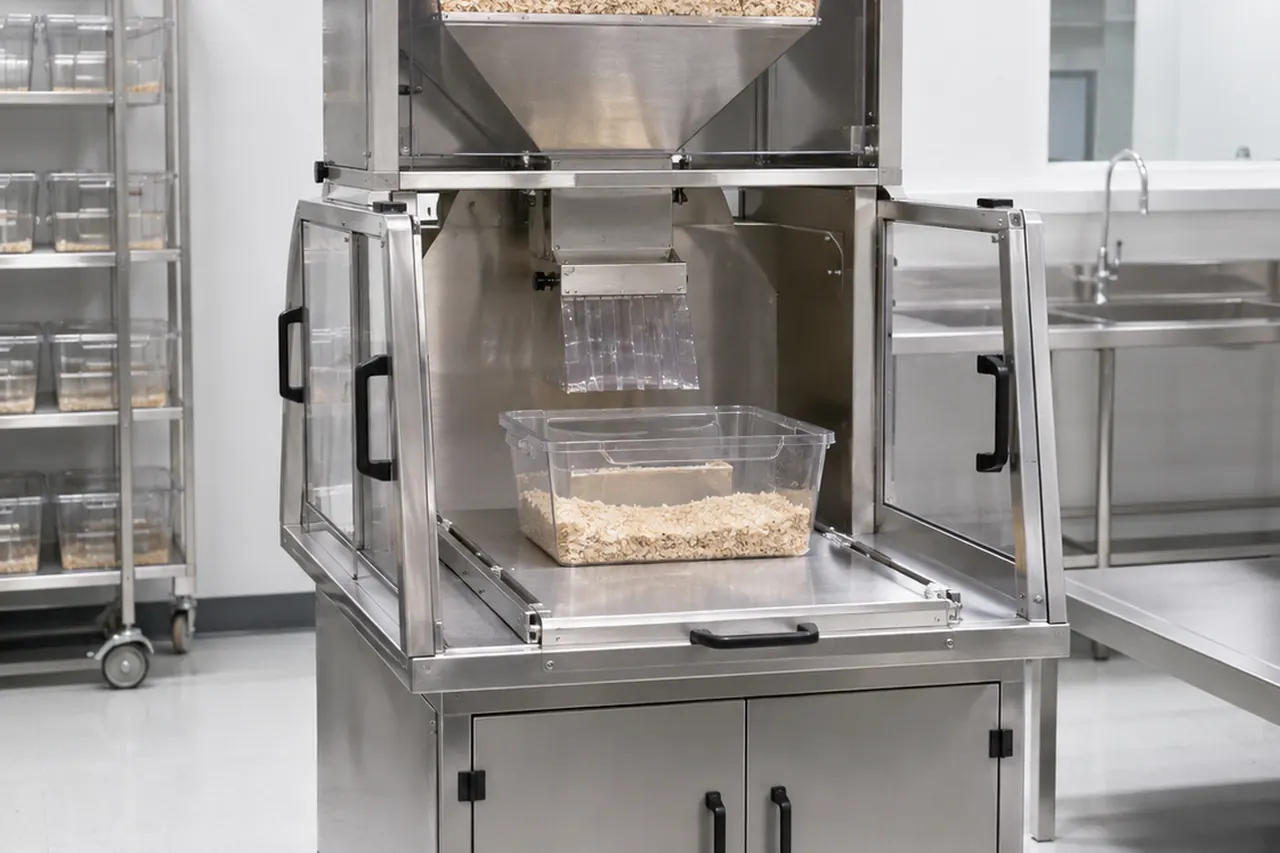
Compatibility for Bedding Collection Station should be checked at the interface level. Confirm dimensions, loads, connection points, utilities, controls, cleaning method, and the related equipment involved, including cage washers, clean-cage storage, waste containers, and clean and soiled carts. Request a written compatibility list or interface drawing for the quoted configuration.
Bedding Collection Station: Which cage sizes and bedding types can be processed at the work surface or chute?+
Choose Bedding Collection Station by starting with clean or soiled process position, bedding type and bulk density, cage count and throughput, dust, allergen, or hazard control, hopper, bag, or waste interface, and cleaning and ergonomic workflow. Then compare the same operating assumptions across suppliers, including quantity, room fit, cleaning, interfaces, accessories, documentation, and future expansion.
Bedding Collection Station: What work-surface height, access, noise, and operator workflow should be considered?+
The answer for Bedding Collection Station depends on the selected configuration and intended operating process. Compare the relevant dimensions, interfaces, utilities, cleaning method, accessories, and operating limits. Ask for a product-specific technical submittal that clearly lists the supplied components and applicable options.
Bedding Collection Station: How are the work surface, chute, filters, bin area, and removable parts cleaned?+
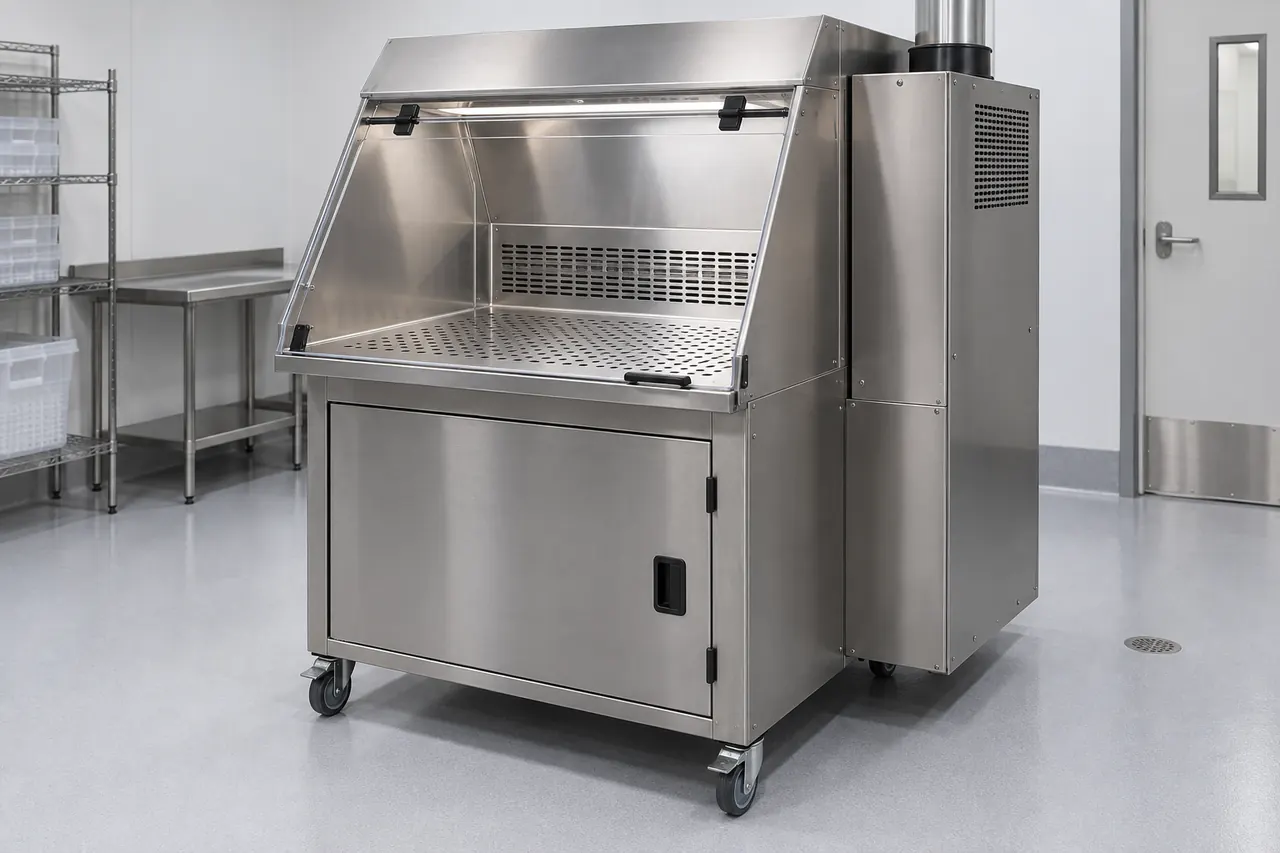
Maintain Bedding Collection Station through a written schedule based on its supplied manual, frequency of use, soil or hazard type, and approved cleaning agents. Routine review should cover work chamber, hopper, seals, and filters, dust collection or airflow components, waste-bag and bedding-contact surfaces, and approved cleaning and filter service. Record inspections, functional checks, filter or consumable changes, repairs, and any required recertification or performance verification.
Bedding Collection Station: What factors affect bedding disposal station price and lead time?+
The price of Bedding Collection Station depends mainly on throughput and chamber size, dust control and filtration, hopper, bag, or waste interface, controls and accessories, and installation and documentation. A comparable quotation should use the same quantity, room interfaces, required accessories, documentation, delivery location, and installation scope.